Across the US
Ship a car from California to Florida
One of the longest drives in the country, about 2,400 miles at the shortest. Put the car on a truck, take a five-hour flight, and skip the week on I-10.
- Distance
- 2,350–3,100 mi
- depends on exact addresses
- Typical transit
- 7–10 days
- after pickup; not a guarantee
- Open transport
- $1,100–$1,700
- typical market range, sedan
- Enclosed transport
- $1,600–$2,625
- about 1.5× open
- Main corridor
- I-10 (often I-5 or I-40 first from Northern California)
- Busiest months
- May–August moves; Oct–Dec to Florida
Why people ship this one instead of driving it
California to Florida is a true cross-country move. From Los Angeles to Jacksonville is roughly 2,400 miles of interstate. From the Bay Area to Miami it's closer to 3,100. Driving it yourself is five or six long days with hotels, fuel and a lot of West Texas, which is why most people moving between the two states fly and ship the car.
The people on this lane are mostly relocating: job transfers, retirements, families following lower housing costs, and military households changing coasts. A smaller group sends a second car to a Florida winter home. Because the trip is long, the planning decisions matter more here than on shorter lanes: open or enclosed, a realistic pickup window, and someone available at the Florida end.
California to Florida car shipping: pricing and time examples
Typical market ranges for a standard sedan on an open carrier, with enclosed alongside. Distances are approximate driving miles; transit is days on the truck after pickup.
| Route | Distance | Open | Enclosed | Transit |
|---|---|---|---|---|
| Los Angeles, CA Miami, FL Most popular | 2,740 mi | $1,100–$1,725 | $1,600–$2,675 | 6–8 days |
| Los Angeles, CA Orlando, FL | 2,520 mi | $1,025–$1,625 | $1,475–$2,525 | 6–8 days |
| San Diego, CA Tampa, FL | 2,480 mi | $1,025–$1,600 | $1,475–$2,475 | 5–8 days |
| San Francisco, CA Fort Lauderdale, FL | 3,000 mi | $1,175–$1,825 | $1,700–$2,825 | 6–9 days |
| San Jose, CA Jacksonville, FL | 2,800 mi | $1,125–$1,750 | $1,625–$2,725 | 6–8 days |
| Sacramento, CA Naples, FL | 2,890 mi | $1,150–$1,775 | $1,675–$2,750 | 6–9 days |
| Riverside, CA Orlando, FL | 2,450 mi | $1,025–$1,575 | $1,475–$2,450 | 5–7 days |
Get your exact California to Florida price
Estimates, not quotes. Ranges reflect publicly advertised rates for a standard sedan on an open carrier as of November 2026. Enclosed transport typically runs about 1.5× the open rate, and SUVs and pickups usually add $100–$200. Your all-in price depends on the exact addresses, the vehicle, the season and carrier availability on your dates.
I-10, the southern way across
Most cars ride I-10, which runs from Santa Monica to Jacksonville. Leaving Los Angeles, carriers cross the Inland Empire and the San Gorgonio Pass near Banning, run the desert through Palm Springs and Blythe, and cross into Arizona for Phoenix and Tucson. Then come New Mexico, El Paso, and the long West Texas stretch through Van Horn and Fort Stockton before San Antonio and Houston. Past Houston: Louisiana's elevated swamp crossings near Lafayette and Baton Rouge, a short run along the Mississippi and Alabama coast, and the Florida Panhandle into Jacksonville.
The southern route is popular for a reason: it avoids the Sierra and Rocky Mountain passes that can close in winter. Bay Area and Sacramento cars often head south on I-5 to meet I-10, or go east on I-40 to Texas, depending on the carrier's other stops. Cars for Orlando or Tampa leave I-10 for I-75 or I-4 in north Florida; Miami-bound cars continue down I-95. Expect the I-10 desert stretches to be hot from June through September, and the Gulf Coast portion to sit inside hurricane season from June 1 to November 30.
When this lane is busiest
This lane runs all year, with two softer peaks. Relocations cluster from May through August, when families time moves around the school calendar and new jobs start. In fall, cars bound for Florida winter homes add to the eastbound traffic from October into December.
- Give us two to three weeks for a summer move; coast-to-coast loads are planned further out than regional runs.
- Flexibility saves the most money on a trip this long. A carrier filling a full load from California to Florida will fit you in more readily if your window is a few days wide.
- Late hurricane season can pause deliveries along the Gulf Coast for a day or two when a storm is close; the carrier holds the car until it's safe.
Best time of year to ship a car from California to Florida
How the market usually moves on this lane through the year, relative to its own average, and how far ahead to book in each window.
Spring and early summer
+5–10%
April–July
Moving season: families, corporate relocations and dealer traffic keep this the firmest stretch for carrier space.
Book 2–3 weeks ahead.
Late summer and fall
5–10% below
August–October
The softest stretch of the year on relocation lanes: good availability and the friendliest pricing.
Book about a week out.
Holidays
≈ average
November–January
Demand firms briefly around the holidays, then settles. Winter weather on mountain stretches is the wildcard.
Book 7–10 days ahead.
Late winter
≈ average
February–March
Demand builds steadily toward the spring moving season; standard booking windows apply.
Book 1–2 weeks ahead.
The cheapest window on this lane
September through November, with a flexible pickup window. Flexible dates let us match your car to a truck already running the route.
How long does California to Florida car shipping take?
Transit starts at pickup, not at booking. Add 1–3 days for carrier dispatch between booking and pickup, and closer to 2–5 days in this lane's busy season.
- California to Florida transit after pickup
- 7–10 days
- Carrier dispatch between booking and pickup
- 1–3 days
- Typical total window, booking to delivery
- 8–13 days
The 500-mile rule. Once loaded, a car hauler covers roughly 350–500 miles a day between stops, within federal limits on driving hours. Los Angeles, CA to Miami, FL (about 2,740 mi) typically runs 6–8 days after pickup. Weather and other customers' stops can add a day.
Request your quote
Two ZIP codes, the vehicle and your dates. You get one all-in price.
Book the lane
Reserve a pickup window. Two to four flexible days gets the best match.
Carrier dispatch
A vetted carrier already running Florida-bound is assigned, usually within 1–3 days.
Transit to Florida
7–10 days on the truck, with updates from us along the way.
Delivery in Florida
The driver calls ahead; you inspect against the pickup report and sign.
7–14
days ahead: the booking sweet spot
Booking one to two weeks ahead gets the best match on this lane, and three to four weeks in its busy season. A flexible pickup window prices lower than a fixed date.
See your California to Florida priceOpen or enclosed for 2,500 miles
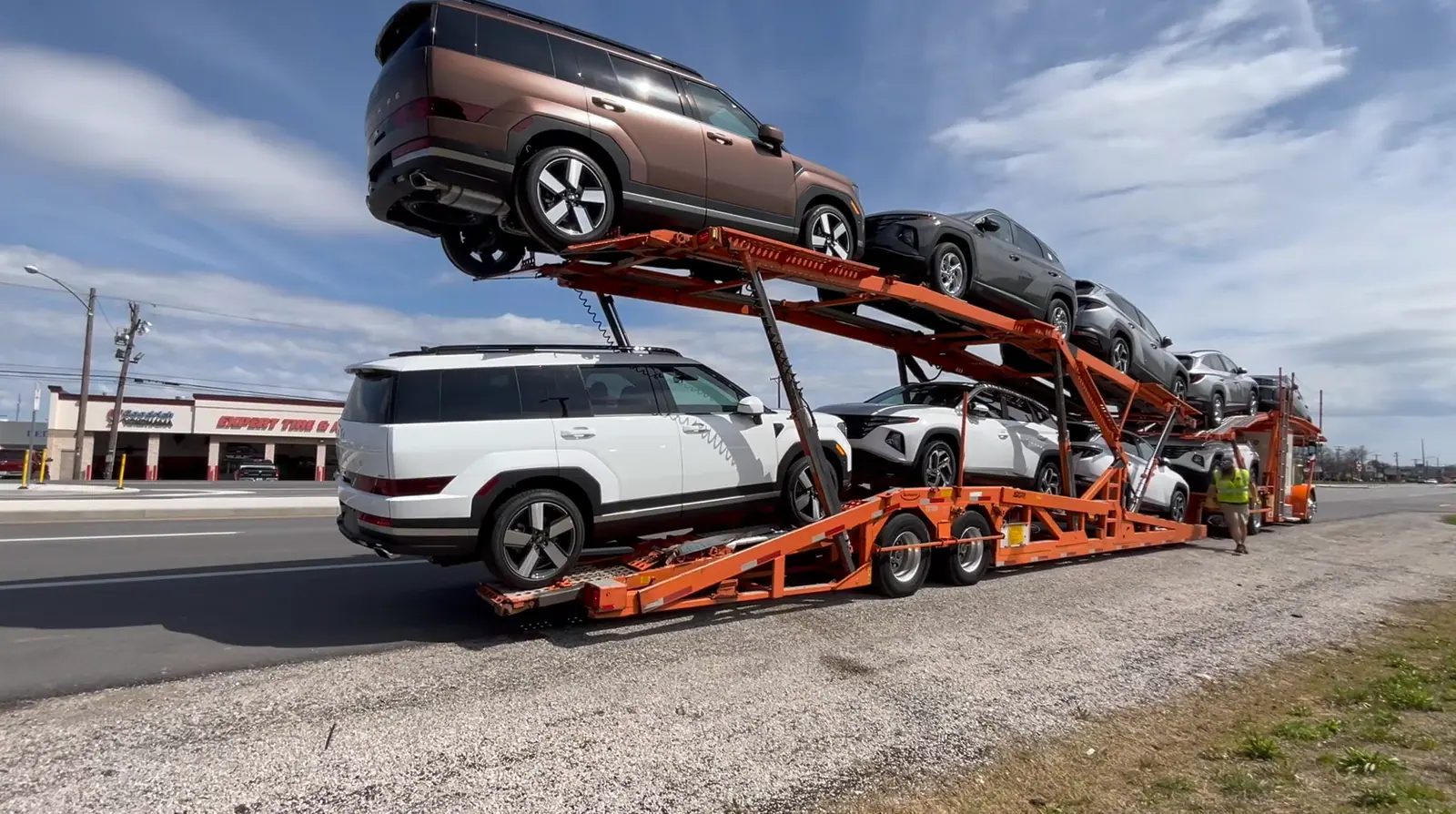
An open carrier is how most cars cross the country, and it's a sound choice for a daily driver. Over this distance the car will see desert sun, some wind-blown grit through West Texas and New Mexico, and probably a Gulf Coast rain shower. Plan on a wash and a look-over at delivery.
The longer the trip, the more an enclosed trailer is worth for a car you care about: a collector car, a car with fresh paint or ceramic coating, or a low sports car. Fewer enclosed trucks run a full coast-to-coast lane, so they need more lead time. Compare both on our enclosed transport and open car transport pages.
Pickup in California
California pickups depend heavily on the neighborhood. A full car carrier is about 75 feet long, and plenty of the state's streets weren't built for one.
- The Westside and the hills (Santa Monica, Brentwood, the Pacific Palisades, Silver Lake, the Hollywood Hills): narrow, steep and winding streets, so plan to meet the truck on a main boulevard.
- Apartment garages in Koreatown, Mid-Wilshire, Downtown and West Hollywood have low entrances and tight ramps. Bring the car up to the street.
- The San Fernando Valley, Orange County and the South Bay usually have wider residential streets and easier loading.
- The Inland Empire (Riverside, Ontario, Rancho Cucamonga, Redlands) sits right on I-10 and is often the simplest pickup on the lane.
- San Diego cars typically head out on I-8 or up I-15 to reach I-10. The Bay Area means steep San Francisco streets and permit-parking blocks, while the suburbs down the Peninsula and across the East Bay are simpler.
Our Los Angeles and Palm Springs pages cover the local details.
Delivery in Florida
Coming in on I-10, Jacksonville is the first stop, then the car follows I-75 or I-4 to Central Florida and the Gulf Coast or I-95 to South Florida. Arrival order depends on the carrier's other deliveries, so we give you a delivery window and update it as the truck gets closer.
Many Florida neighborhoods are gated or HOA-run, and some don't allow car carriers inside. Check with your community before delivery day. Afternoon thunderstorms are common in summer, so morning delivery windows are the norm. The local details are on our Orlando, Tampa and Miami pages.
California to Florida: lane questions
How long does it take to ship a car from California to Florida?
Does every car go on I-10?
Should I ship enclosed for a cross-country move?
Can I ship two cars for the move?
Can my company pay for the shipment?
Will the summer heat on I-10 hurt my car?
Cities on this lane
All citiesServices for this lane
All services- Open car transportThe way most cars in America get from one state to another: on an open, two-level carrier running the interstates every day.
- Enclosed transportWalls, a roof and a smaller load. For the cars you'd rather not expose to a thousand miles of weather, grit and road spray.
- Corporate relocationYour employee's car arrives about when they do, the invoice goes to the company, and nobody in HR has to chase a truck driver.
Similar lanes
All routesRead before you book
All guidesFly coast to coast, and let the car take I-10
Tell us the California start, the Florida destination and your move date. We'll quote the entire trip as one number.