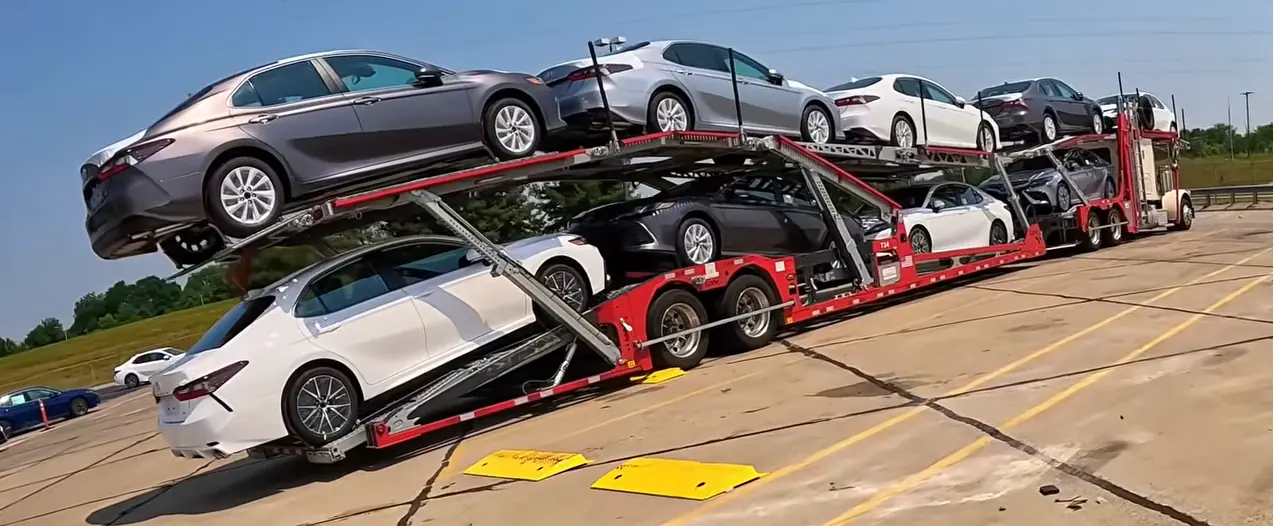
Multi-car shipping
Two cars, three cars, a whole household's worth. Sometimes they belong on one truck and sometimes they don't, and we'll tell you which.
When you have more than one vehicle to move
Most households own two or more cars, and most moves involve all of them. Maybe one of you is driving and the other car needs to ship, or maybe nobody wants to drive 1,200 miles twice. Snowbird couples often keep two cars in the south. A teenager's first car joins the family move. Collectors move a garage in stages. Each of these is a multi-car shipment, and each one plans a little differently.
You make one request, list every vehicle, and we build the plan: which ones can ride together, which ones should go separately, and what the timing looks like for each. You get one point of contact for the whole thing, not a separate conversation per car.
One truck or several: how we decide
Putting every car on one carrier sounds simplest, and when it works, it is. But it needs two or more open slots on the same truck, going the same way, on the same days. That's easy to find on a busy lane in a quiet month, and harder in peak season. Here's how we weigh it:
- Same pickup and delivery address: the best case for one truck. One stop at each end, one inspection appointment, both cars arrive together.
- Different pickup addresses: if your cars are in two cities (say, one at home and one at a college or a second residence), separate carriers are often faster than routing one truck to both.
- Different transport types: a classic that should go enclosed and a daily driver that's fine open will usually travel on different trucks. Paying enclosed rates for both rarely makes sense.
- A firm date for one car only: if one vehicle has to be there by a specific day and the other can follow, splitting them keeps you from paying rush pricing on both.
List every vehicle
Year, make and model for each, whether each one runs, and any you'd like kept together.
We propose a plan
Together, split, or a mix, with the reasoning and the expected timing for each car.
Pickup and inspection per vehicle
Every car gets its own condition report on the bill of lading, even when they share a truck. Check each one at delivery before signing.
How multi-car moves are priced
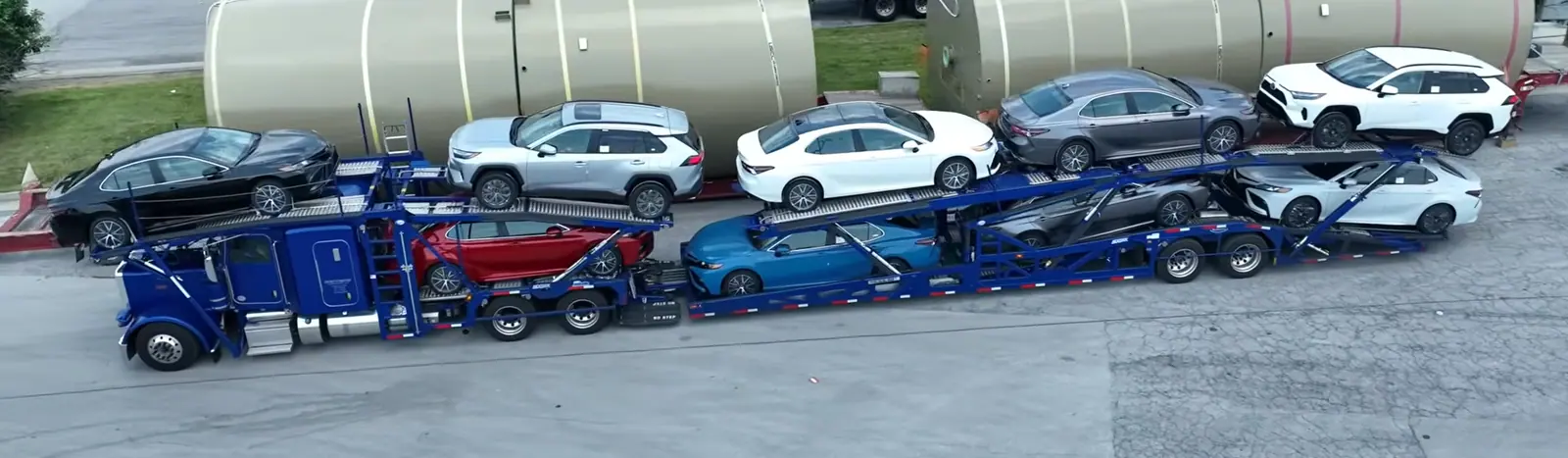
Each vehicle is priced for its own size, condition and transport type. What changes with a multi-car booking is efficiency: two cars loaded at one stop and unloaded at another take less of the carrier's time than two separate pickups, and that's reflected in how the job is quoted. The things that move every quote still apply to each car.
| Factor | Effect on a multi-car move |
|---|---|
| Number of stops | Shared pickup and delivery addresses keep stops to a minimum. Each extra address adds driver time. |
| Mix of vehicles | A sedan and a three-row SUV are priced differently. Big vehicles use more of the carrier's space and weight. |
| Open vs enclosed | Each car can travel the way it needs to; you don't have to pay enclosed rates for the minivan. |
| Timing | Two slots on one truck are easier to find with flexible dates. A tight shared window can mean splitting or paying for priority. |
| Condition | A non-running vehicle in the group needs a winch-equipped truck, which can affect whether everything rides together. |
For the general picture of what drives car shipping prices, see our guide to how much it costs to ship a car.
Timeline when cars travel together or apart
Cars sharing a truck arrive together, usually on the same day. Cars split across carriers can arrive days apart, sometimes in a different order than they left. That's fine for most families, as long as it's planned: decide which car you need first and we'll prioritize it.
Household moves have one more moving part, the moving company. A common pattern is to keep one car until the movers have loaded the house, ship it last, and have the first car delivered just after you arrive. Our transit-time guide has typical day ranges by distance to help you line it up.
Preparing several vehicles at once
- Label the keys. One set per car, tagged with the make and model, so the driver isn't guessing in the driveway.
- Photograph each car separately on pickup day, every panel plus the odometer.
- Empty every car. It's tempting to use the second car as a moving box, but personal items aren't covered by cargo insurance and add weight the carrier didn't plan for.
- Leave about a quarter tank in each and confirm each one starts, steers and brakes, or tell us which ones don't.
- Name one person per address to hand over and receive the cars. If the cars are registered to different people, that's fine; whoever is there signs each inspection.
- Remove toll transponders and parking tags from every vehicle.
Situations that come up often
- Snowbird couples with two cars. Lanes like New Jersey to Florida and New York to Florida see plenty of two-car households, with the trip home on Florida to New York in spring. Book early; two slots on the same truck in November go fast.
- Relocations paid for by an employer. If a company is covering the move, our corporate relocation service handles invoicing and coordination with HR.
- Small batches for businesses. Dealers and fleet managers moving a handful of units can use dealer and auction transport, which is built around release numbers and lot hours.
- A mix of running and non-running vehicles. The project car can come too. It just needs a winch, and that decides which truck it can ride on.
Common questions
Is it cheaper to ship two cars together?
Will both cars arrive on the same day?
Can my cars be picked up from two different addresses?
Can one car go enclosed and the other open?
How many vehicles can you ship at once?
Can I pack one car with boxes from the move?
Routes where this comes up
All routesCities we serve
All citiesOften paired with
All services- Open car transportThe way most cars in America get from one state to another: on an open, two-level carrier running the interstates every day.
- Dealer and auction transportAuction pickups, dealer trades and retail deliveries, booked by people who know that a missing gate pass or a closed lot costs you money.
- Corporate relocationYour employee's car arrives about when they do, the invoice goes to the company, and nobody in HR has to chase a truck driver.
Guides worth reading
All guidesOne request for every car in the driveway
List each vehicle, where it is and where it's going. We'll plan the move, together or split, and give you all-in pricing for each.