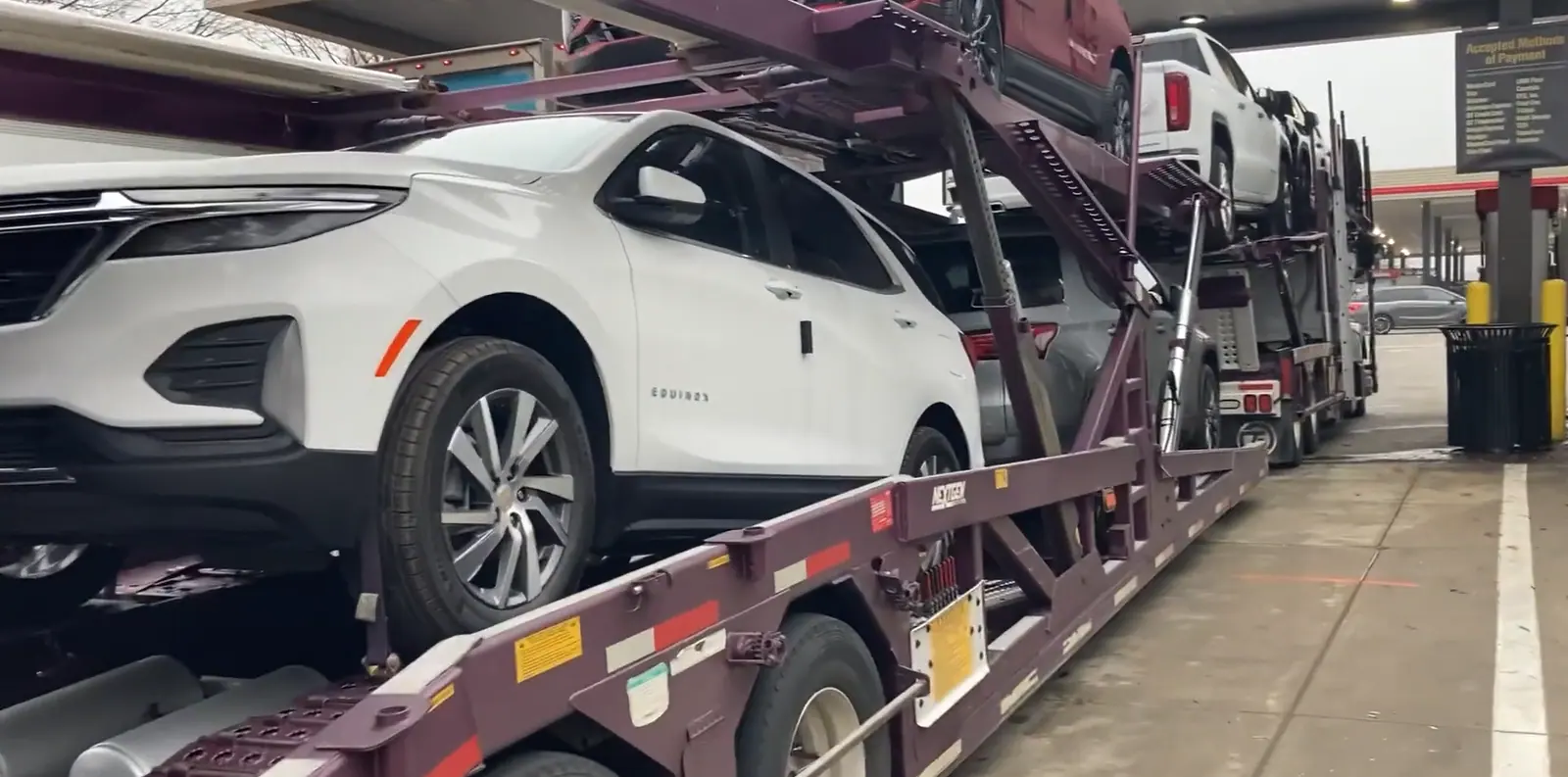
Canada to US car shipping
Your car crosses the border with the right papers in the file, picked up at your door in Canada and delivered to your door in the States.
What this covers, and who books it
We arrange for a carrier partner to collect your car at your address in Canada, present it to US Customs and Border Protection at a commercial port of entry, and deliver it to your address in the US. You don't drive to the border and you don't sit in the truck lane. The car crosses on its own with a file of documents, and you meet it at the other end.
The people who book this are a fairly specific group, and the paperwork is built around them:
- Snowbirds wintering in Florida, Arizona, Texas or California who would rather fly than spend three days on I-75 or I-5. Our snowbird car shipping page covers the round trip.
- Canadians on a temporary US stint (a contract, a sabbatical, a long family stay) who keep their Canadian residence and bring the car for under a year.
- People moving to the US for good. This is a different import with different rules, covered below. Tell us at the quote stage and we'll set the shipment up correctly from the start.
How a cross-border shipment runs
Quote and booking
Give us your pickup postal code, the destination ZIP, the vehicle and your first available date. The price you get is all-in for the trip, border handling included.
The paperwork package
We send you a short list of what we need and prepare the customs forms from it. You sign the authorization letter and send scans of your passport and registration. If anything is missing, such as a lienholder letter, we tell you before a driver is dispatched, not at the border.
Pickup at your door
The driver walks around the car with you, records its condition on the bill of lading (the inspection report and receipt in one) and takes the keys. Many drivers also photograph the car; take your own photos too.
The crossing
The carrier files its electronic manifest with CBP before arriving and presents the load at a commercial port. CBP may inspect any vehicle, which is one reason the car needs to be empty.
Delivery
You get an update when the car is across and another when the driver is close. At delivery you check the car against the pickup report, note anything new on the bill of lading, then sign.
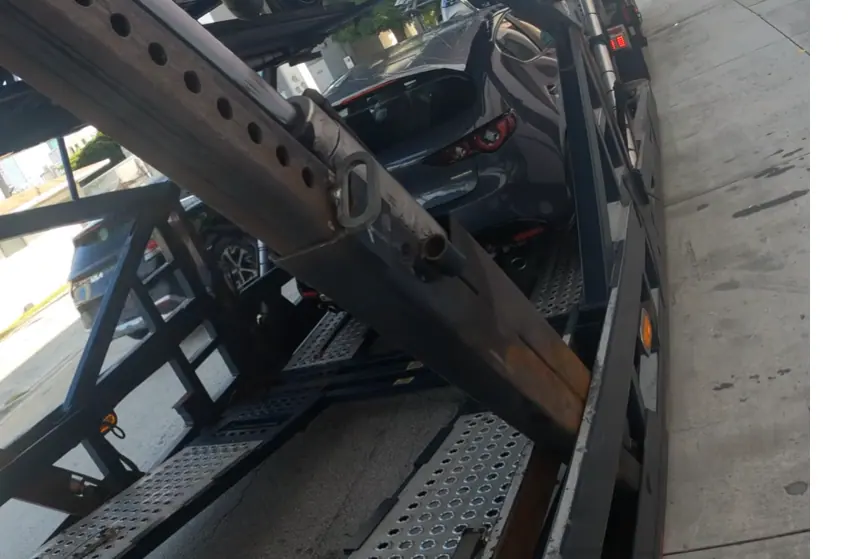
What affects the price of shipping a car from Canada to the US
A cross-border quote isn't a domestic quote with a border fee added on. Fewer carriers run international loads, because they need authority and insurance on both sides plus the equipment and experience to clear customs. Canadian carriers also can't pick up and drop off between two US points, so a truck that brings cars south usually needs a load heading north to make the trip pay. Those realities shape the price more than the mileage alone does.
| Factor | Why it matters |
|---|---|
| Season | October to December southbound and March to May northbound are the snowbird rush. Space on cross-border trucks fills first, so booking early matters more than on domestic lanes. |
| Pickup location | A driveway in Mississauga or Laval sits on a carrier's natural path. Muskoka, the Eastern Townships or the Okanagan means extra miles off the highway to reach you. |
| Destination | Florida is the busiest snowbird destination and usually the easiest to schedule. Arizona and Southern California are longer hauls with fewer trucks. |
| Vehicle size and weight | A crossover takes less deck space and weight than a three-row SUV or a pickup, and car haulers are limited by both. |
| Open or enclosed | Open carriers are the standard. Enclosed transport costs more and has less capacity crossing the border, so it needs more lead time. |
| Lead time | A flexible pickup window gives us more carriers to choose from. A fixed date has to be paid for. |
What's included: transport door to door, the carrier's cargo insurance while the car is in its care, and the customs handling at the border. Your quote shows the full figure, and your booking confirmation spells out when payment is due.
How long it takes, door to door
There are three parts: a pickup window of a few days (carriers plan cross-border runs ahead, so give us a date range), the border itself (usually part of the day's drive with complete paperwork, though an inspection can add hours), and transit, which follows federal limits on daily driving time.
- Toronto to South Florida: usually 4–7 days after pickup. See Toronto to Florida.
- Montreal to South Florida: usually 4–7 days. See Montreal to Florida.
- Vancouver to Southern California: usually 3–6 days. See Vancouver to California.
For a fall departure, contact us four to six weeks ahead. You can book closer to the date; you'll just have fewer trucks to choose from.
What to prepare before pickup
- Passport: a clear scan of the photo page for the owner named on the registration.
- Registration / ownership: in Ontario that's the vehicle permit; in Quebec the SAAQ registration certificate; in BC your ICBC registration.
- Lienholder or lessor letter if the car is financed or leased, giving permission for it to go to the US temporarily. Banks can take a couple of weeks to issue one, so ask first.
- Insurance: keep your Canadian policy active, and confirm with your insurer that it covers you driving in the US for the length of your stay.
- An empty car: no luggage, golf clubs or boxes. Standard equipment like the spare and jack can stay.
- Toll transponders out: remove a 407 ETR or other transponder so it doesn't log tolls on the trip.
- About a quarter tank of fuel, or a reasonable charge for an EV, plus one set of keys for the driver.
- Your own photos of every panel, the wheels and the odometer, taken the day of pickup.
US customs: the rules that apply to your car
A Canadian resident bringing their own car in for a temporary stay is a routine case for CBP. It just has to be documented the right way.
The one-year nonresident rule
Under HTSUS subheading 9804.00.35, a nonresident can bring a vehicle into the United States for personal use without formal entry or duty, for up to one year. Two conditions come with it. The car must leave the US within a year of entering. And it can't be sold, given away or otherwise transferred while it's there. If your plans change and you want to keep the car in the US permanently, that becomes a formal import with emissions and safety requirements and possibly duty. Talk to us before the year is up.
The forms
- DOT Form HS-7, the NHTSA declaration, with the box for a nonresident's temporary personal-use import.
- EPA Form 3520-1, the emissions declaration, marked for a nonresident importing for personal use.
- CBP Form 3299, the Declaration for Free Entry of Unaccompanied Articles. You need it because you aren't crossing with the car. Carriers often call this a "3299 entry".
- An authorization letter or power of attorney letting the carrier, and its customs broker if it uses one, present the vehicle on your behalf.
Belongings
Ship the car empty. Anything inside has to be declared, the carrier's cargo insurance doesn't cover personal items, and a car packed with winter supplies is a good way to get held at the port. Send belongings separately or take them on the plane.
Lanes from Canada we've written up
Each lane page covers the corridor the carrier runs, the commercial crossing it uses, the season, and what pickup and delivery look like at both ends. The customs package described on this page applies to all of them.
- Toronto to Florida car shippingI-75 or I-77 to I-95 · about 4–7 days in transit
- Montreal to Florida car shippingI-87, then I-95 or I-81 · about 4–7 days in transit
- Ottawa to Florida car shippingI-81, then I-75 or I-95 · about 4–7 days in transit
- Toronto to Arizona car shippingI-70, I-44 and I-40, or I-10 · about 6–9 days in transit
- Vancouver to California car shippingI-5 (plus I-10 to the desert) · about 3–6 days in transit
- Vancouver to Arizona car shippingI-5 to I-10, or I-84 and I-15 inland · about 5–8 days in transit
Common questions
Do I pay duty to bring my Canadian car into the US for the winter?
Can my car stay in the US for more than a year?
Do I need to be at the border when my car crosses?
Can I pack things in the car for the winter?
My car is financed. Can it still go?
Which border crossing will my car use?
Is the car insured while it crosses?
Can you bring the car back in the spring?
Routes where this comes up
All routes- Toronto to Florida car shippingI-75 or I-77 to I-95 · about 4–7 days in transit
- Montreal to Florida car shippingI-87, then I-95 or I-81 · about 4–7 days in transit
- Vancouver to California car shippingI-5 (plus I-10 to the desert) · about 3–6 days in transit
- Ottawa to Florida car shippingI-81, then I-75 or I-95 · about 4–7 days in transit
Cities we serve
All citiesOften paired with
All services- US to Canada shippingTwo very different trips north: a Canadian car going home after the season, and a US-bought car becoming Canadian. We set yours up as the right one.
- Snowbird shippingFly south and have your own car waiting, then do it again in reverse when the snow melts. Both legs planned around the season.
- Enclosed transportWalls, a roof and a smaller load. For the cars you'd rather not expose to a thousand miles of weather, grit and road spray.
Book the border crossing and skip the drive
Tell us your postal code, destination and dates. You'll get one all-in price with the customs paperwork included.