Inoperable vehicle transport
A car doesn't have to run to be shipped. It does have to roll, steer and stop, and the carrier has to know it's coming.
What counts as inoperable
To a carrier, "inoperable" (or "inop") means the car can't be driven onto the trailer under its own power. That covers a dead engine, a failed transmission, a car that only starts with a jump pack, or one that was damaged and isn't safe to drive. What the driver needs to know is less about why it doesn't run and more about what it can still do:
| Question | Why it matters |
|---|---|
| Do all four wheels roll? | A winch can pull a rolling car. A car with seized brakes, flat-spotted or missing wheels, or a locked transmission may need a forklift or a flatbed instead. |
| Does it steer? | Someone has to keep it straight on the ramps. A locked steering column with no key is a problem. |
| Do the brakes work? | Once the car is on the deck, it has to stop where the driver wants it. |
| Does it start with help? | "Runs with a jump" is a different job from "won't turn over", and drivers plan for each differently. |
If the answers are "yes, yes, yes", almost any winch-equipped carrier can take it. If any is "no", tell us. It narrows the field and changes the plan, but it often isn't the end of the road.
How a non-running car gets loaded
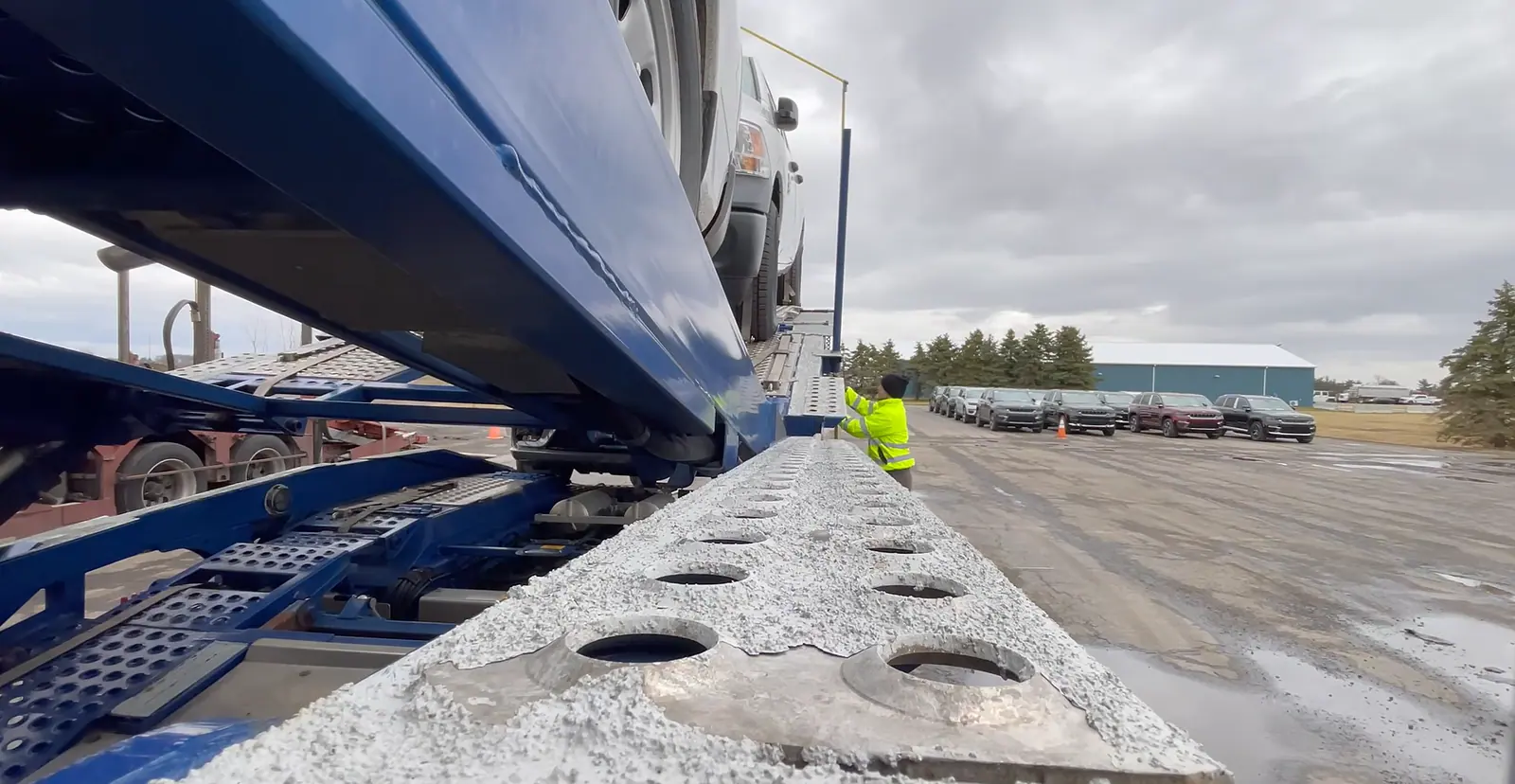
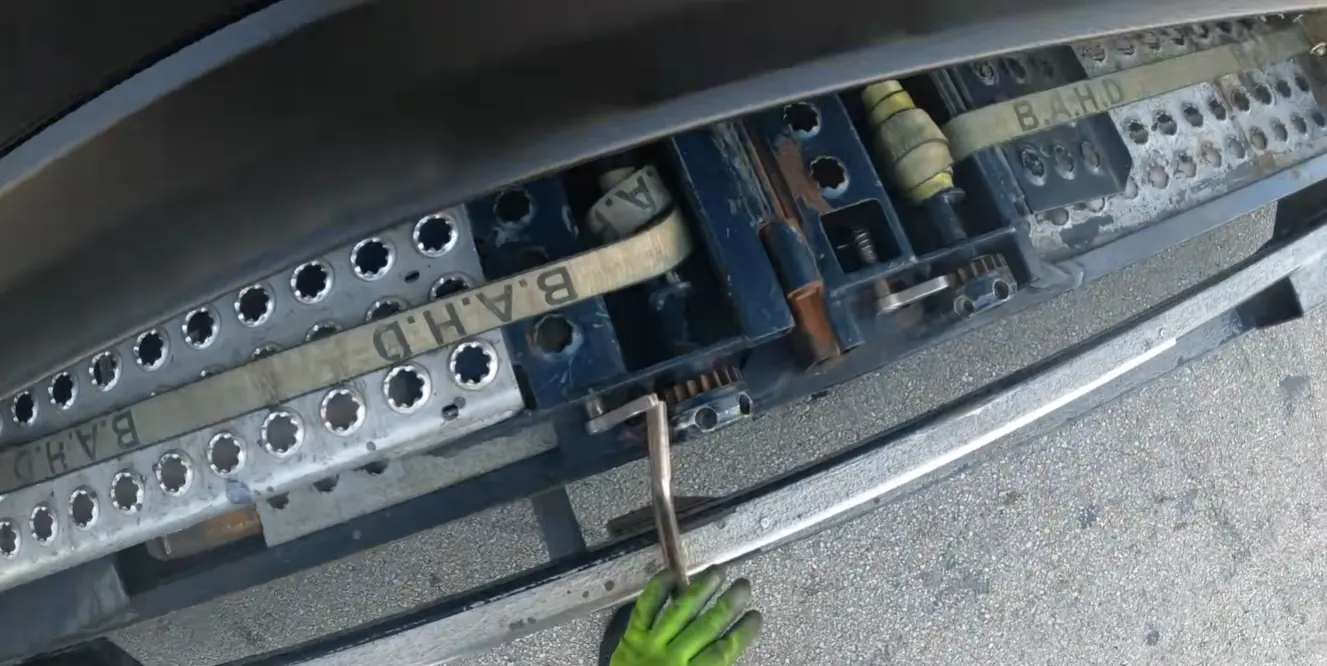
The carrier attaches a winch cable to a tow hook or a secure point on the frame and pulls the car up the ramps slowly, while a second person or the driver steers and controls the brakes. Winched cars usually ride on the lower deck or at the rear of the trailer, where the climb is shortest. At delivery the process runs in reverse: the car rolls down under control and is pushed to where it will sit.
That last part is easy to forget. The receiving end needs a spot the car can be pushed to: a shop bay, a driveway, a level spot on the street. If it's going to a body shop, a restoration shop or a dealer or auction lot, let them know it's arriving inop so someone's ready to receive it.
Why non-running cars cost more to ship
Shipping an inop car costs more than shipping the same car running, for straightforward reasons: not every truck has a winch, loading and unloading take far longer, the car takes a position on the trailer the driver can't easily rearrange around, and there's more risk at both ends. What moves the number:
- How inoperable it is. Rolls and steers is the simplest case. Doesn't roll means special equipment.
- Size and weight. A non-running full-size truck is a bigger winch job than a dead compact. See SUV and truck shipping.
- Pickup and delivery location. A level driveway beats a muddy backyard or a crowded salvage yard.
- Distance, lane and season, the same as any shipment.
Your quote reflects the car as you describe it, so describe it accurately. A car booked as running that turns out to need a winch may not fit on the truck that arrives, and the schedule starts over. Our guide to what drives car shipping costs has the full picture.
Timeline for an inop shipment
Expect a somewhat longer pickup window than for a running car. We're matching to a smaller group of carriers that have a winch and room in the right spot on the trailer. Busy lanes such as Texas to Florida or California to Texas have more of those trucks than rural ones. Once loaded, transit is no different from any other car on that truck.
How to prepare a car that doesn't run
- Inflate the tires, or fit temporary wheels, so the car rolls straight.
- Leave the key so the steering unlocks and the car can be put in neutral. If there's no key, tell us.
- Know how to release the parking brake and select neutral. Many newer cars need the battery connected for both.
- Clear a path from where the car sits to where a truck can stop. A driver can't winch a car out of a backyard through a gate.
- Remove loose parts from inside the car, or secure them, including panels and trim from a project.
- Photograph existing damage, especially on accident-damaged cars, so the condition report matches reality.
Our full prep checklist covers the rest.
The non-running cars we see most
- Auction and insurance buys. A flood car from a Houston-area yard or a hail-damaged sedan bought online. These usually come with a release form, storage-fee deadlines and yard hours, so speed at pickup matters.
- Project and barn-find cars. Often the tires have sat flat for years and the brakes are seized. Fresh tires or wheel dollies make the difference between a routine winch load and special equipment.
- Estate and inherited vehicles. A car that sat in a garage after an owner passed, picked up by a family member on behalf of the estate. Have the paperwork showing who can release it.
- Breakdowns far from home. A car that died mid-move or on a road trip, sitting at a repair shop in another state. We coordinate with the shop on hours and access.
Each comes with its own release rules and timing, and we plan pickup around them. Long-haul inop moves like Texas to California are routine for winch-equipped carriers.
Common questions
Can you ship a car that doesn't run?
Why does a non-running car cost more to ship?
What if my car only starts with a jump?
Can you pick up a car from a salvage yard or tow lot?
Does the car need to have keys?
Can an inoperable car go on an enclosed carrier?
Routes where this comes up
All routes- Texas to Florida car shippingI-10 (I-20 from Dallas) · about 2–5 days in transit
- California to Texas car shippingI-10, or I-40 to Dallas · about 4–7 days in transit
- Michigan to Florida car shippingI-75 · about 3–6 days in transit
- Texas to California car shippingI-10, or I-20 to I-10, or I-40 · about 4–7 days in transit
Cities we serve
All citiesOften paired with
All services- Dealer and auction transportAuction pickups, dealer trades and retail deliveries, booked by people who know that a missing gate pass or a closed lot costs you money.
- SUV and truck shippingBig vehicles ship every day. The trick is describing yours accurately, so the truck that shows up has room for it.
- Open car transportThe way most cars in America get from one state to another: on an open, two-level carrier running the interstates every day.
Tell us what it can and can't do
Rolls, steers, brakes, starts? With those answers and the two addresses, we'll find a winch-equipped carrier and send one all-in price.