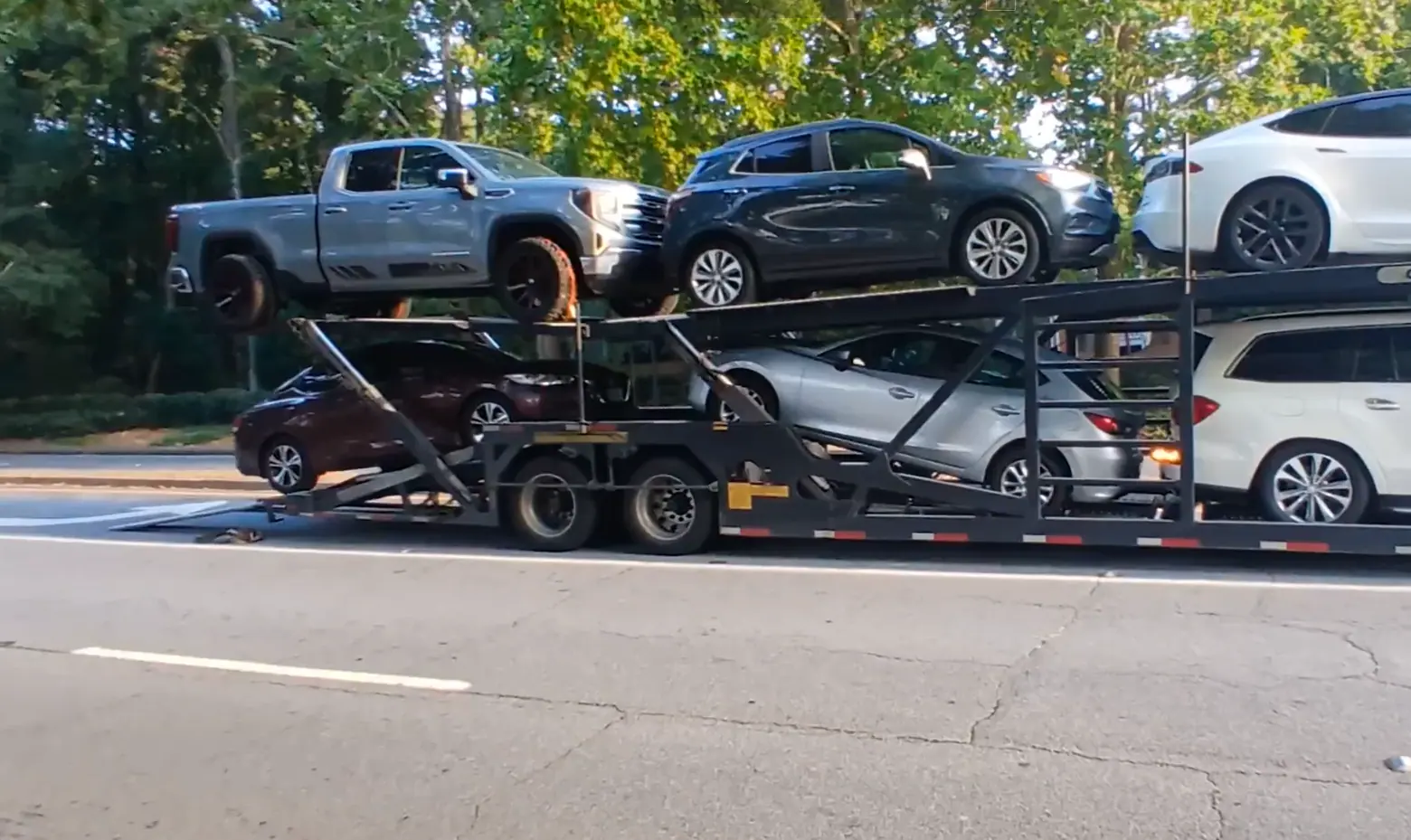
EV shipping
An electric car ships like any other car, as long as the battery, the weight and the loading are planned before the truck shows up.
What's different about shipping an electric car
On the trailer, an EV is just a car: it's strapped by the wheels, it rides on the same deck as everything else, and it doesn't need anything plugged in. The differences show up at both ends of the trip. Getting an EV on and off a carrier depends on it having enough charge to move, a healthy 12-volt battery to wake up, and a driver who knows how to put it in neutral when it won't drive. Some EVs are also a lot heavier than the gas cars they replace, and heavy cars change how a carrier loads its trailer.
We arrange EV shipments for owners moving across the country, buyers picking up a used EV out of state, and seasonal residents taking a car to Florida or Arizona for the winter. When you book, we pass the model and its quirks to the carrier so the driver arrives knowing what to expect.
How an EV shipment runs
Tell us the exact model and trim
"Electric pickup" isn't enough. A Ford F-150 Lightning, a Rivian R1T and a GMC Hummer EV are very different loads. Trim and battery size affect weight, and weight decides where the car can go on the trailer.
We match it to a carrier that can take it
Some carriers put heavy EVs only on the lower deck, and some need to keep the rest of the load light to stay under the legal weight limit. We confirm the carrier can actually take your car before we schedule pickup.
Pickup with a short handover
Show the driver how to unlock the car, put it in neutral and turn it off. A Tesla key card, a fob or a PIN-to-drive code needs to be handed over, not just your phone key.
Delivery and a quick charge check
At delivery, check the car against the pickup report, note the battery percentage on the bill of lading, and know where your first charge will come from before the truck arrives.
What affects the price of shipping an EV
| Factor | How it plays out with an EV |
|---|---|
| Curb weight | A Model 3 or Model Y weighs about what a midsize gas SUV does. An electric full-size pickup can top 6,000 pounds, and the Hummer EV passes 9,000. Car haulers run out of legal weight before they run out of deck, so a heavy EV can use up the allowance of more than one car. |
| Size and height | Electric SUVs and pickups take full-size slots. A roof rack or roof box can rule out the upper deck. |
| Open or enclosed | Most EVs ride open without trouble. Owners of high-value or low-slung EVs sometimes choose enclosed transport, which costs more. |
| Whether it moves under its own power | A car that drives on and off loads in minutes. An EV with a dead 12V battery or no charge has to be winched, or rolled on with wheel dollies if it can't be put into neutral. |
| Distance, lane and season | The same things that move every quote. Busy lanes such as California to Texas have more trucks, and timing matters more than mileage in peak months. |
Your quote is all-in for the vehicle you describe. Tell us about modifications, oversized wheels or an aftermarket lift up front, so the carrier we book can actually take the car.
Timeline: the same transit, a little more planning
Transit for an EV is the same as for any car on that lane. Federal limits on driving hours set the pace, not what's under the hood. The one place EVs can add time is matching: if your vehicle is very heavy, we need a carrier with weight to spare on that run, which can take a day or two longer to line up in busy months. Give us a pickup window of a few days and it rarely matters.
During transit the car sits switched off, and EVs lose a little charge each day from standby systems. Over a week on the trailer that's usually a small number, but it's why you shouldn't ship with the battery nearly empty.
How to prepare an EV for pickup
- Moderate charge, not full and not empty. Most carriers ask for somewhere between a quarter and half a battery: enough to drive on and off the trailer and reach a charger at the other end. We'll confirm your carrier's preference at booking.
- Check the 12-volt battery. If it's weak, the car may not unlock or shift into neutral even with a healthy main pack. If it's been acting up, have it tested before pickup.
- Learn your car's transport or tow mode. Teslas have a Transport Mode that keeps the parking brake released for winching. Many other EVs have a tow or neutral-hold setting described in the owner's manual. Show the driver how to use it.
- Turn off the power drains. On a Tesla, switch off Sentry Mode and Cabin Overheat Protection. On other EVs, turn off any scheduled preconditioning or camera-based security.
- Hand over a physical key. A key card or fob for the driver, plus your PIN-to-drive code if it's enabled, or turn it off for the trip.
- Keep the charging cable with you unless the carrier agrees it can stay in the trunk. Loose items aren't covered by cargo insurance.
- Photograph the car, including the battery percentage and the odometer, on the day of pickup.
Our guide to preparing your car for shipping covers the steps every vehicle needs, EV or not.
Loading, tie-downs and EVs that won't move
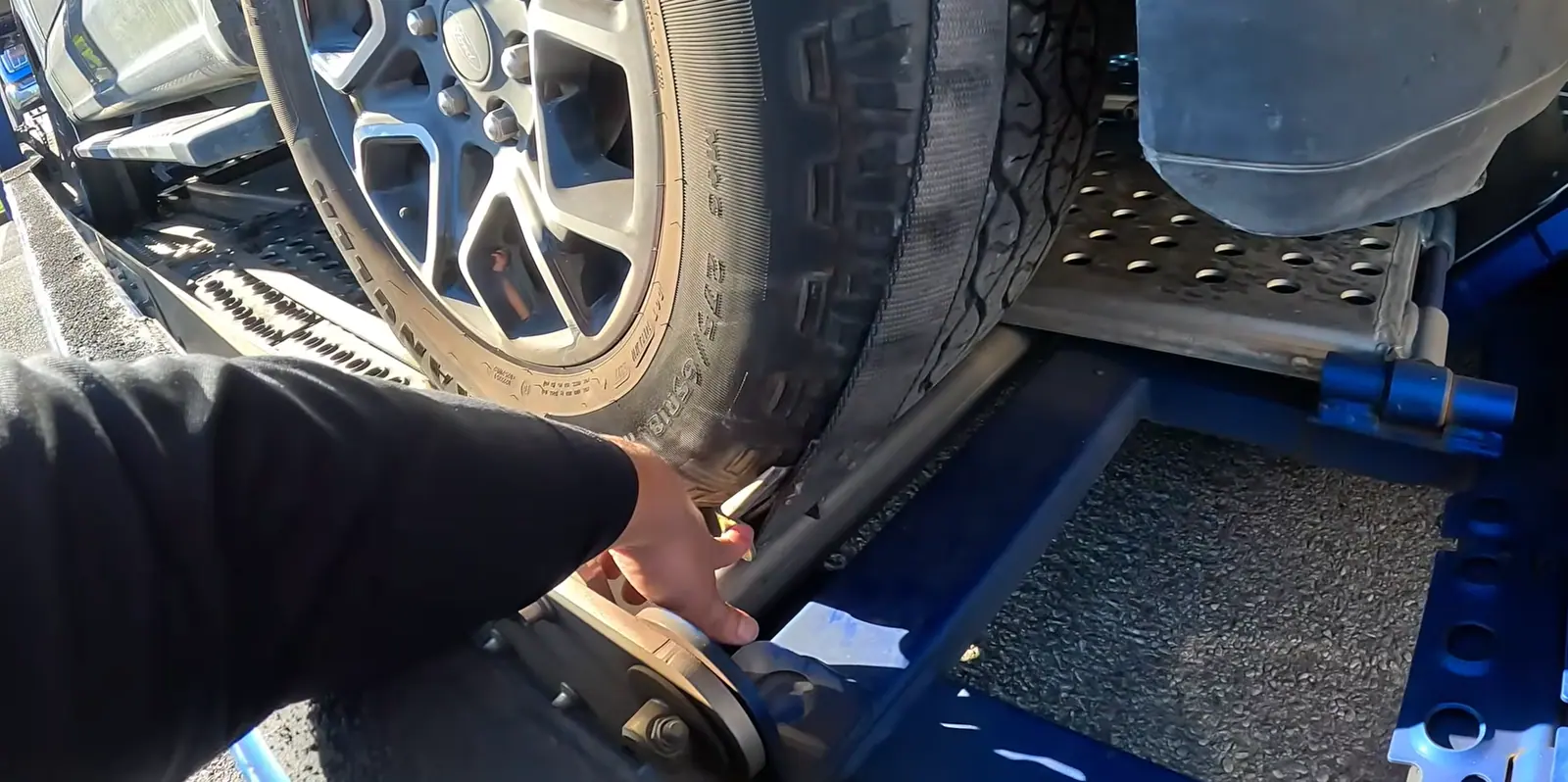
EV battery packs run along the floor of the car, which is why drivers secure EVs by the wheels with straps rather than hooking anything to the underside. If a car ever has to be lifted, it should only be at the jack points shown in the owner's manual; lifting under the pack in the wrong place can damage it. Tell us if your car has aftermarket aero panels or a low front splitter, because ramp angles matter on low cars.
A dead EV is still shippable, but it has to be planned. If the car can be put in neutral, it can be winched on like any inoperable vehicle. If it can't, because the 12-volt is dead or the car locks its wheels without power, the driver needs a jump pack or wheel dollies. Either way, tell us at quote time so the right truck shows up.
Common questions
How much charge should my EV have for shipping?
Can you ship a Tesla?
Are electric trucks harder to ship?
My EV won't turn on. Can it still be shipped?
Should I ship my EV open or enclosed?
Does the carrier charge my car on the way?
Routes where this comes up
All routesCities we serve
All citiesOften paired with
All services- Enclosed transportWalls, a roof and a smaller load. For the cars you'd rather not expose to a thousand miles of weather, grit and road spray.
- Open car transportThe way most cars in America get from one state to another: on an open, two-level carrier running the interstates every day.
- SUV and truck shippingBig vehicles ship every day. The trick is describing yours accurately, so the truck that shows up has room for it.
Ship your EV with the details sorted up front
Send us the exact model, trim and route. We'll match it to a carrier that can take its weight, and you'll get one all-in price.