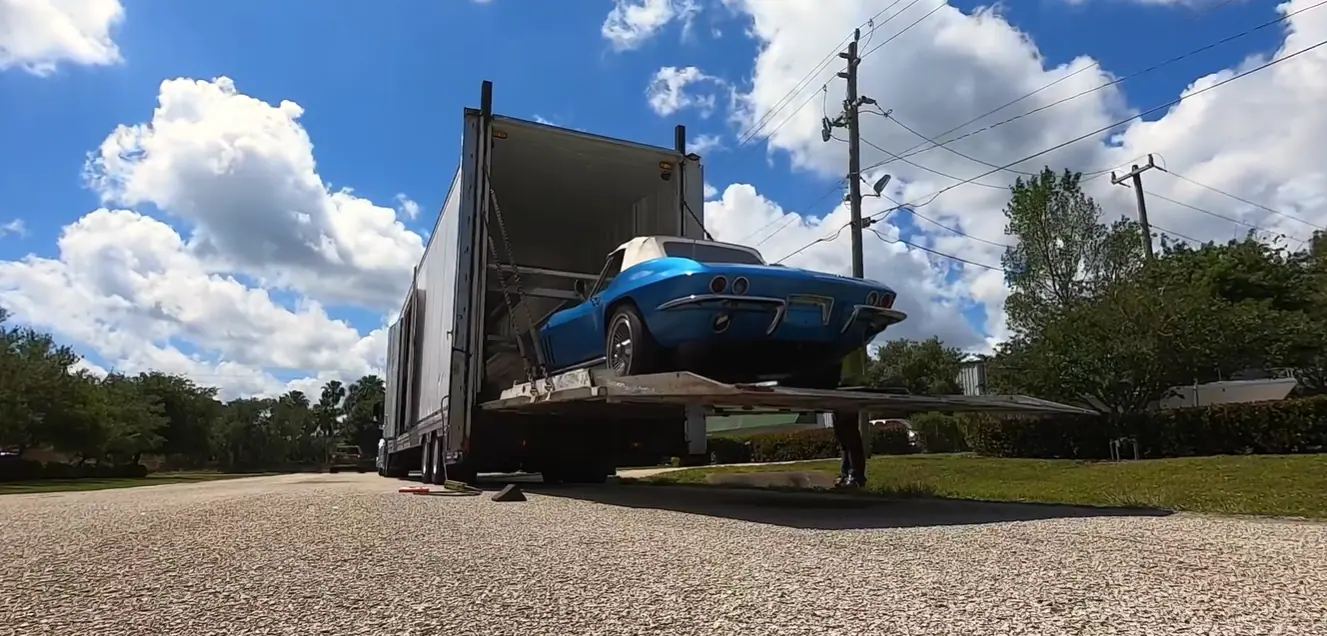
Classic and luxury car transport
Collector cars, exotics and anything irreplaceable, moved by drivers who know what a splitter, a carburetor and a nervous owner need.
Who this is for
Some cars need more than a covered trailer. A 1960s roadster with original paint, a mid-engine exotic with four inches of ground clearance, a restored truck headed to a concours lawn: these need a carrier that loads them differently, ties them down differently, and carries enough coverage to make the trip worth taking. This service is built around those cars and the people who own them:
- Collectors moving cars between homes, garages, storage and restoration shops.
- Buyers and sellers at the big auction weeks: Scottsdale in January, Amelia Island in March and Monterey in August.
- Owners of new exotics and high-end luxury cars who want a delivery-quality arrival after a relocation.
- Dealers and brokers of collector cars who need a carrier they can send to a client's door. See dealer and auction transport.
How a high-value car is handled
These cars ride enclosed, almost always in a hard-sided trailer. Three details make the real difference:
- Soft-tie securing. Instead of chains hooked into frame slots, the car is held by straps over the tires or wheel nets, so nothing touches the suspension, body or a fragile undercarriage.
- Liftgate loading. A hydraulic platform at the back of the trailer raises the car level to the deck. There's no steep ramp to clear, which is what makes low cars, long-overhang classics and cars with delicate exhaust tips safe to load.
- A slower inspection. Expect a detailed walk-around at pickup, with existing chips, stone marks and wheel scuffs recorded on the bill of lading and photographed. The same report is the reference at delivery.
Many owners like to be there for loading and to brief the driver on starting procedure, fuel shutoffs, kill switches or a sticky choke. Drivers who move collector cars expect that conversation.
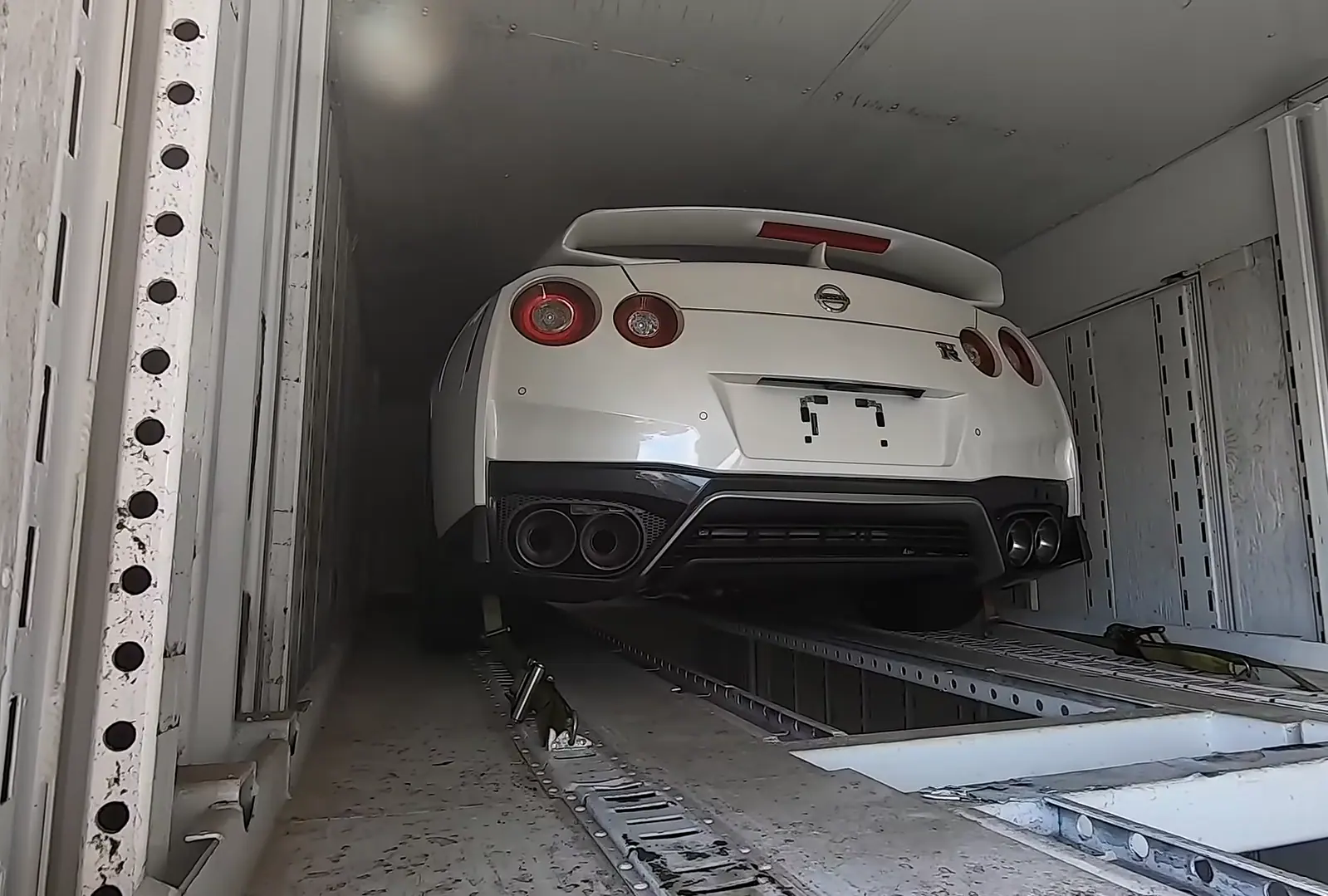
What goes into the price
| Factor | Why it matters |
|---|---|
| Trailer and equipment | A hard-sided trailer with a liftgate is the most capable and most in-demand equipment on the road. |
| Coverage needed | Carriers with higher per-vehicle cargo limits are fewer, and a car worth more than a typical limit narrows the field. |
| Exclusivity | Sole use of the trailer, or a single-car truck that goes straight to the destination, is priced as the whole trip. |
| Event weeks | Auction and concours weeks book enclosed space far in advance, and the price follows demand. |
| Lane | Collector-car corridors like New York to California and the Northeast to Florida have more enclosed trucks than rural routes. |
| Ground clearance and size | Very low or very long cars need specific equipment and placement on the trailer. |
Not sure whether your car needs this level of care or a standard enclosed trailer will do? Our guide to open vs enclosed transport covers the trade-offs.
Booking ahead, especially around events
For an ordinary move, two to four weeks' notice gives us a good choice of enclosed carriers. For auction and show weeks, book as soon as you have the dates, since enclosed trucks into Scottsdale in January or Monterey in August fill early. Transit itself is similar to any enclosed run, and a single-car truck can work to a firm delivery date when the event won't wait.
Preparing a classic or exotic for transport
- Document condition in daylight: every panel, the wheels, the interior and the odometer, plus close-ups of any existing marks.
- Measure ground clearance at the lowest point (often the front lip or exhaust) and tell us when you request a quote.
- Check for leaks. Older cars weep; a drip tray or a note to the driver keeps fluids off the car below.
- Battery and fuel: a healthy battery or a tender-ready connection, and a modest amount of fuel.
- Write down any quirks, such as starting sequence, kill switch, alarm or a hood release that sticks, and leave the note with the key.
- Remove or secure anything detachable: tonneau covers, removable hardtops and targa panels that aren't latched, and all personal items.
More general steps are in our car shipping prep checklist.
Coverage: ask before you book
Every carrier carries cargo insurance, but limits vary, and they're often set per vehicle and per load. For a high-value car, the questions that matter are what the carrier's limit is for your car, what the deductible is, and whether anything is excluded. We confirm the limit for the specific carrier before you book, so you can decide with real numbers. Many collectors also keep their own agreed-value policy active during transport. Ask your insurer how it applies while the car is in a carrier's care.
Common questions
Do classic cars always need enclosed transport?
What is soft-tie securing?
My car is very low. Can it still be shipped?
How is a high-value car insured in transit?
Can you deliver a car to an auction or a concours event?
Can my car be the only one on the truck?
Can I be there when the car is loaded?
Routes where this comes up
All routes- New Jersey to Florida car shippingNJ Turnpike / I-95 · about 3–5 days in transit
- Boston to Florida car shippingI-95, or I-84 to I-81 · about 4–6 days in transit
- New York to California car shippingI-80, I-70 or I-40 west · about 7–10 days in transit
- California to Arizona car shippingI-10 or I-8 east · about 1–3 days in transit
Cities we serve
All citiesOften paired with
All services- Enclosed transportWalls, a roof and a smaller load. For the cars you'd rather not expose to a thousand miles of weather, grit and road spray.
- EV shippingAn electric car ships like any other car, as long as the battery, the weight and the loading are planned before the truck shows up.
- Dealer and auction transportAuction pickups, dealer trades and retail deliveries, booked by people who know that a missing gate pass or a closed lot costs you money.
Tell us about the car, and we'll match the trailer
Year, make, model, ground clearance and roughly what it's worth. We'll come back with enclosed options, the carrier's coverage limit and one all-in price.