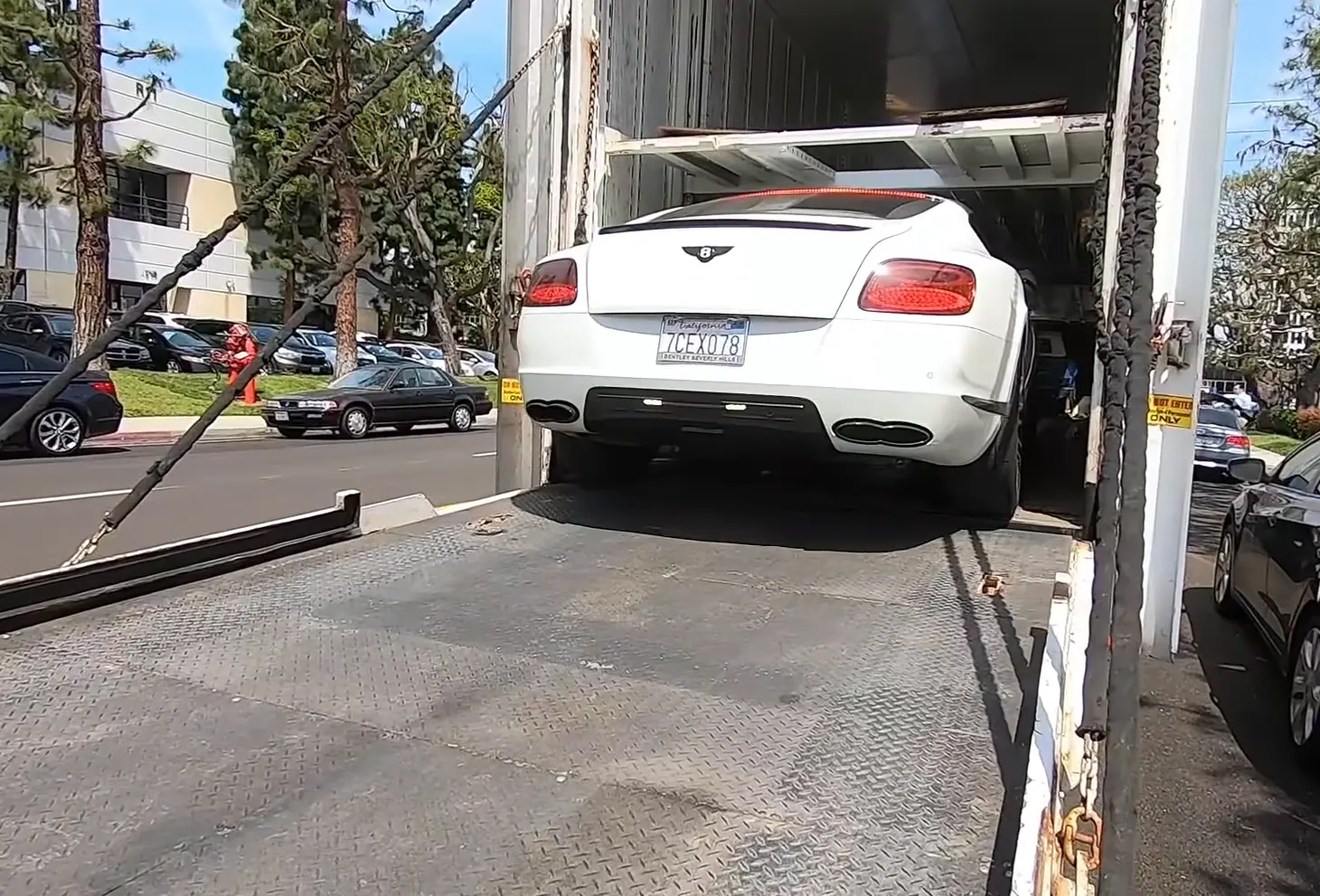
Enclosed auto transport
Walls, a roof and a smaller load. For the cars you'd rather not expose to a thousand miles of weather, grit and road spray.
What enclosed transport is, and who it's for
An enclosed carrier is a car hauler with sides and a roof. The car rides inside, sealed off from rain, sun, hail, road salt and the occasional stone thrown up by the truck ahead. Enclosed trucks also tend to carry fewer cars, from a single vehicle up to about seven, and the drivers who run them are used to vehicles with low splitters, fragile trim and owners who care about both.
It isn't only for six-figure exotics. Owners book enclosed for:
- Collector, vintage and high-value cars. Our classic and luxury transport page covers the extra handling those need.
- New or nearly new cars with fresh ceramic coating, paint protection film or a matte wrap.
- Convertibles and soft-tops on long trips.
- Winter moves out of the salt belt, like New York to Florida or Boston to Florida, when the owner doesn't want road brine anywhere near the car.
- Electric vehicles whose owners want them out of the weather. See EV shipping for charge and weight details.
Hard-sided, soft-sided, and how cars are loaded
Not every enclosed trailer is the same. Knowing the difference helps you ask the right question:
| Trailer | What it is | Best for |
|---|---|---|
| Hard-sided | Rigid aluminum or steel walls and roof, fully sealed against weather and dust. Many have a hydraulic liftgate at the rear. | High-value and collector cars, very low cars, maximum protection. |
| Soft-sided | A frame covered with heavy-duty curtains or tarps. Weather and debris stay out, and it's lighter than a hard box. | Newer cars and daily drivers whose owners want cover at a lower premium. |
| Single- or two-car enclosed | A smaller box trailer behind a pickup or medium-duty truck. | One-off moves, events and short-notice runs. |
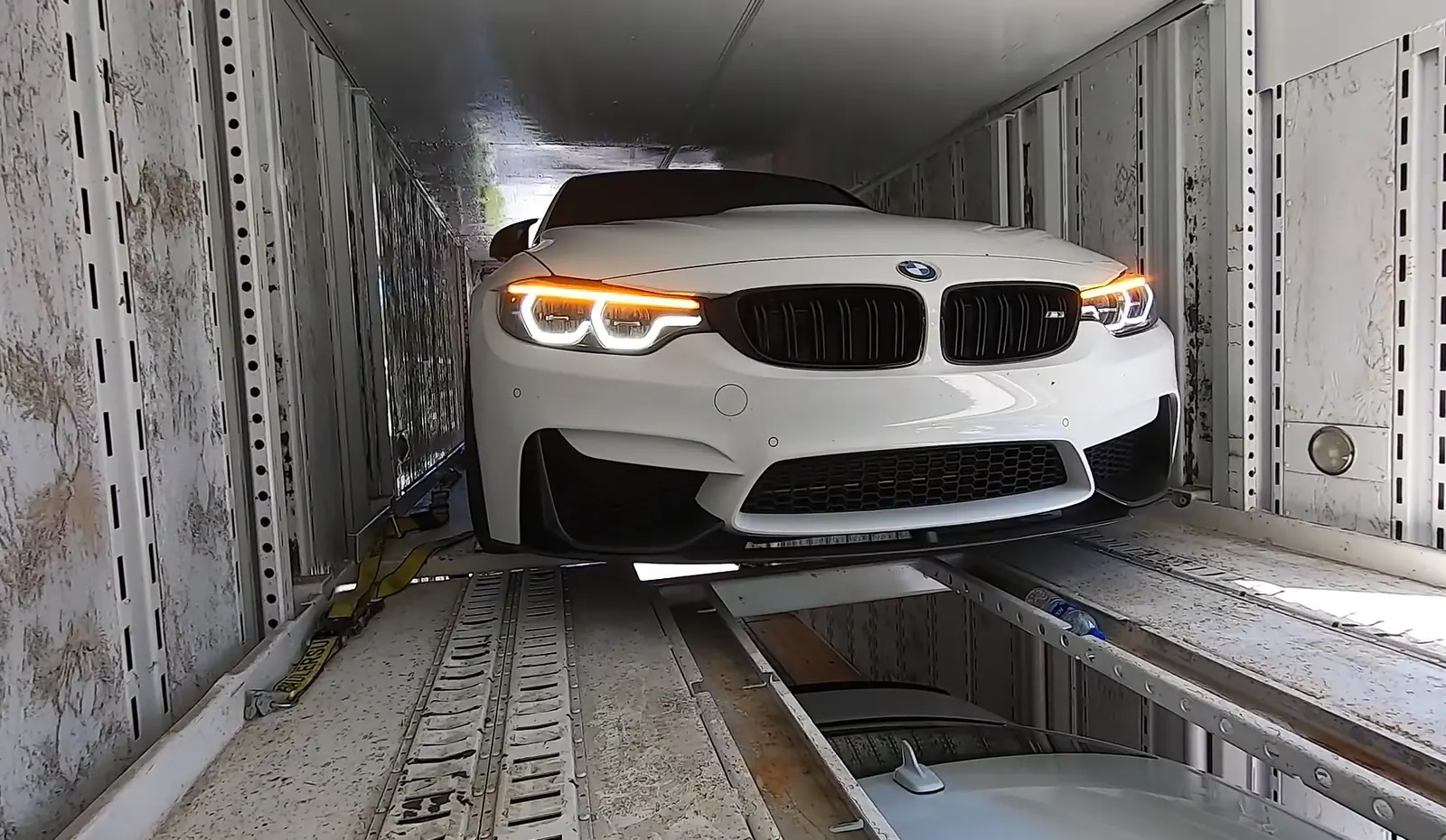
Loading is slower and more deliberate than on an open carrier. Drivers usually use soft straps over the tires rather than chains to the frame. Liftgate trucks raise the car level instead of driving it up a steep ramp, which is what makes enclosed transport possible for cars with very little ground clearance. Inspection works the same as anywhere else: condition noted on the bill of lading before loading, and checked again before you sign at delivery.
Why enclosed costs more, and what moves the number
Enclosed transport carries a real premium over open, and it's worth understanding why before you decide. Each truck carries fewer cars, so the cost of the trip is split fewer ways. The equipment costs more to buy and run. And there are far fewer enclosed trucks, so on many lanes we're matching your car to one of a handful of carriers rather than dozens.
- Trailer type: hard-sided with a liftgate sits at the top of the range, soft-sided lower.
- Distance and lane: enclosed trucks cluster on the big collector-car and snowbird corridors, such as the Northeast to Florida and California to Florida. Off those corridors, expect a longer wait or a higher figure.
- Vehicle: length, weight and how low it sits all affect which trucks can take it.
- Season and events: enclosed space tightens around the big collector-car auctions and shows, and during the snowbird months.
- Exclusivity: having your car alone on the truck is possible, and it's priced as the whole truck.
Your quote covers the trip door to door and the carrier's cargo insurance. For a high-value car, ask us what the carrier's coverage limit is per vehicle; we'll tell you before you book. To compare the two options side by side, see open vs enclosed car transport.
Typical enclosed transport cost by distance
Market ranges for a standard sedan, by trip length. The per-mile rate falls as the distance grows.
| Distance | Open | Enclosed | Per mile | Transit |
|---|---|---|---|---|
| Under 500 milese.g. Los Angeles to Phoenix | $350–$550 | $500–$850 | $0.95–$1.49 | 1–2 days |
| 500–1,000 milese.g. Houston to Orlando | $600–$925 | $875–$1,425 | $0.62–$0.95 | 2–3 days |
| 1,000–1,500 milese.g. New York to Miami | $675–$1,075 | $975–$1,675 | $0.53–$0.84 | 3–4 days |
| 1,500–2,000 milese.g. Chicago to Phoenix | $825–$1,275 | $1,200–$1,975 | $0.47–$0.73 | 4–5 days |
| 2,000–2,500 milese.g. Dallas to Los Angeles, via San Francisco | $975–$1,525 | $1,425–$2,375 | $0.42–$0.66 | 5–7 days |
| Over 2,500 milese.g. New York to Los Angeles | $1,125–$1,750 | $1,625–$2,725 | $0.40–$0.63 | 6–8 days |
Estimates, not quotes. Ranges reflect publicly advertised rates for a standard sedan on an open carrier as of November 2026. Enclosed transport typically runs about 1.5× the open rate, and SUVs and pickups usually add $100–$200. Your all-in price depends on the exact addresses, the vehicle, the season and carrier availability on your dates. Figures checked November 2026.
Scheduling enclosed transport
Because there are fewer enclosed trucks, the pickup window is usually the longer part of the timeline. Give us as much notice as you can, ideally two to four weeks, and more for event weeks or the November rush to Florida. Once the car is loaded, transit time is similar to open transport, sometimes a little faster since there are fewer stops. A cross-country enclosed run commonly takes 7–10 days on the road.
If your date is fixed, such as a show, a closing or a flight, tell us at the start. A single-car enclosed truck can often work to a firm date when a shared trailer can't.
Preparing a car for enclosed transport
- Note the car's ground clearance, especially at the front splitter, and tell us if it's under about five inches. That decides whether you need a liftgate truck.
- Wash it and photograph it in good light, close up on existing chips and curb rash.
- Write down anything unusual about starting, shifting or the alarm, and leave the note with the key.
- Fix or report any fluid leak. Enclosed trailers often carry cars on two levels, and drips land on the car below.
- Remove loose items, toll tags and aftermarket parts that could rattle off in transit.
- If the car has a custom cover, ask the driver whether to use it inside the trailer. Some prefer the car uncovered for strap clearance.
Common questions
Is enclosed transport worth it for a regular car?
What's the difference between hard-sided and soft-sided enclosed trailers?
Can you ship a very low car enclosed?
How far ahead should I book enclosed transport?
Will my car be the only one on the truck?
Is enclosed transport insured differently?
Routes where this comes up
All routes- New York to Florida car shippingI-95 · about 3–5 days in transit
- Boston to Florida car shippingI-95, or I-84 to I-81 · about 4–6 days in transit
- California to Florida car shippingI-10 (often I-5 or I-40 first from Northern California) · about 7–10 days in transit
- New Jersey to Florida car shippingNJ Turnpike / I-95 · about 3–5 days in transit
Cities we serve
All citiesOften paired with
All services- Open car transportThe way most cars in America get from one state to another: on an open, two-level carrier running the interstates every day.
- Classic & luxury carsCollector cars, exotics and anything irreplaceable, moved by drivers who know what a splitter, a carburetor and a nervous owner need.
- EV shippingAn electric car ships like any other car, as long as the battery, the weight and the loading are planned before the truck shows up.
Keep it covered from driveway to driveway
Tell us about the car, including its clearance, and the dates. We'll match it to the right enclosed trailer and send one all-in price.