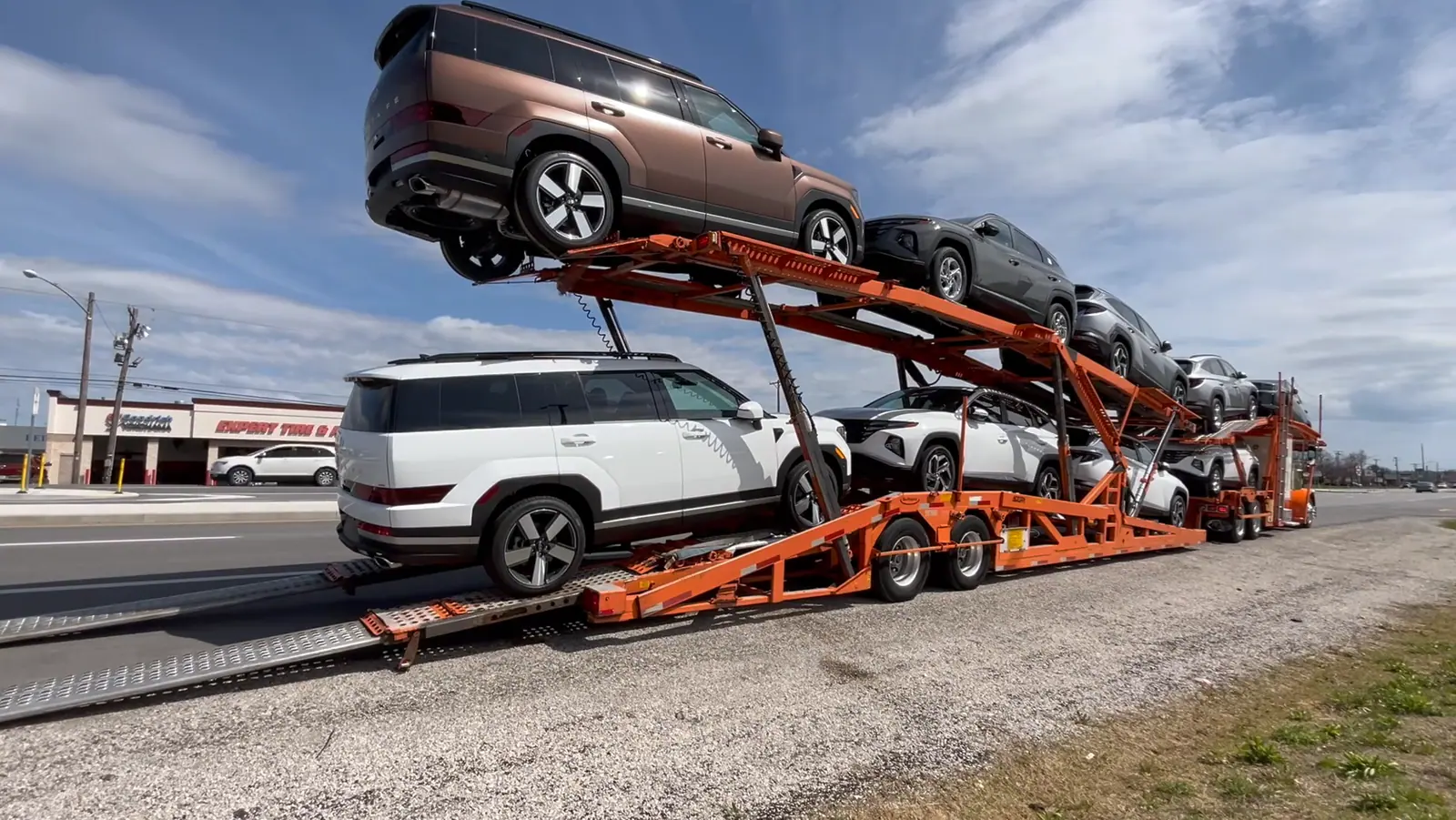
Door-to-door car shipping
No terminal to drive to and no lot to collect from. The carrier comes to your address at both ends, or as close as the truck can safely get.
What door-to-door actually means
Every shipment we arrange is door-to-door. You give us a pickup address and a delivery address, and the carrier's driver meets the car at each one. There's no depot in the middle where you drop the car off and wait for it to be collected.
The fine print in the industry, which we'd rather say up front, is that "door" means the closest point a full car carrier can legally and safely reach. Most of the time that's your driveway or the curb out front. Sometimes it's the end of your street or a parking lot five minutes away. The rest of this page is about telling those cases apart before pickup day, so nobody is surprised.
It's the right service for almost everyone: families moving across the country, someone selling a car to a buyer in another state, a parent sending a car to a student, a retiree heading south for the season.
How pickup and delivery are planned
You tell us about both addresses
Besides the street address, we ask about access: is it a gated community, a condo tower, a narrow street, a dead end? Are there signs restricting trucks? The two minutes this takes saves hours on pickup day.
We match a carrier and confirm the window
Once a driver is assigned, you get a pickup window, usually a day or two, narrowing as the truck gets closer.
The driver calls ahead
Drivers typically call when they're a few hours out, and again when they're close. That's when the exact meeting spot is settled if the truck can't come to the door.
Inspection and loading
You and the driver walk the car together. Its condition goes on the bill of lading, and you get a copy before the car is loaded.
Delivery, the same way in reverse
A call ahead, a walk-around against the pickup report, any new damage noted on the paperwork before you sign, and then the keys are yours.
What affects the price of door-to-door shipping
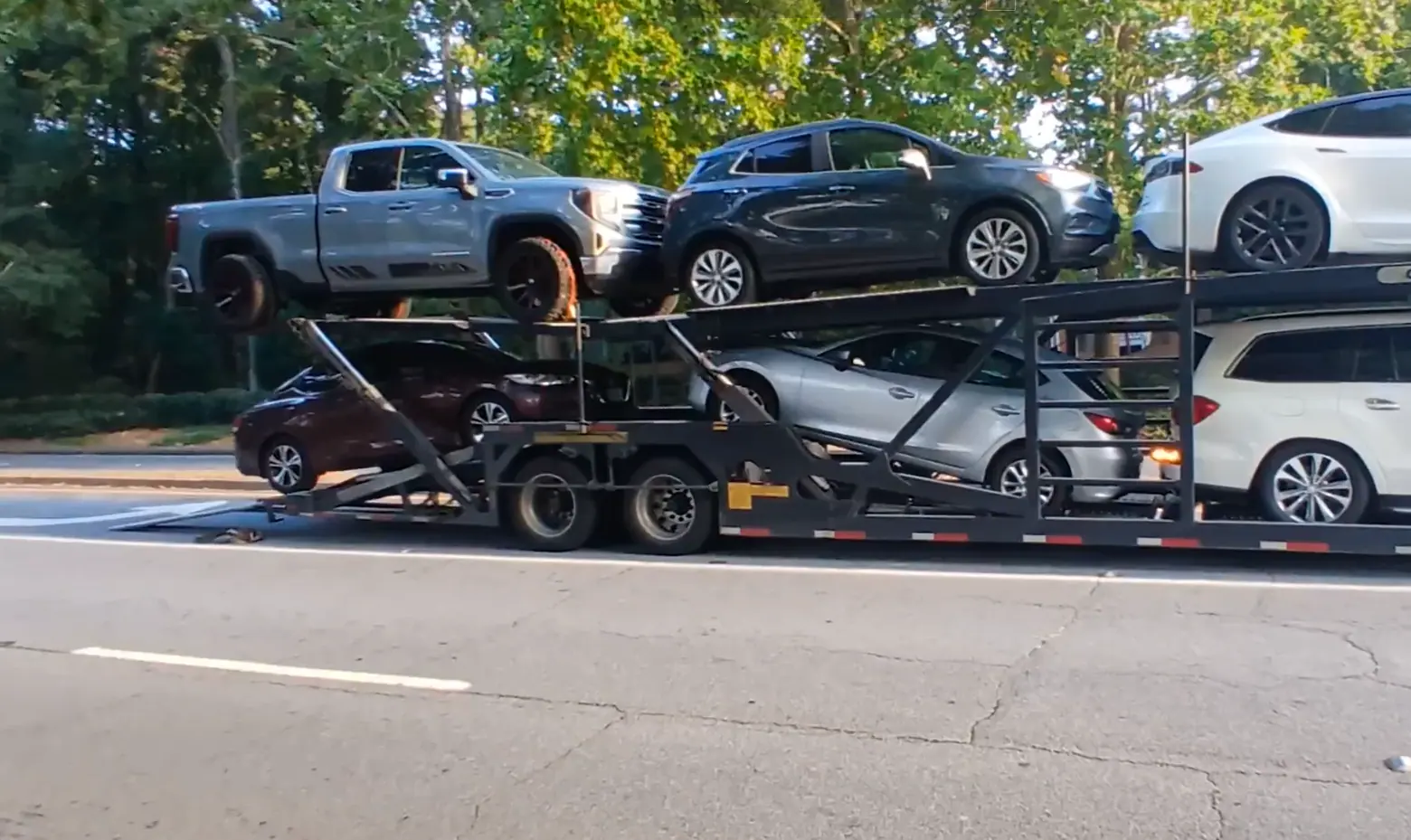
Because door-to-door is how we ship every car, the price is shaped by the same things as any shipment: distance, vehicle, season and whether you choose an open or enclosed carrier. The door-to-door piece adds one more question: how far off the main route the driver has to go.
| Address type | What it means for the carrier |
|---|---|
| Suburb near an interstate | The easiest case. A short detour, often curbside. |
| Dense city core | Tight streets, parking rules and traffic. Usually a nearby meeting point and an off-peak time. |
| Gated or HOA community | Depends on community rules. Some allow carriers in with notice; many don't. |
| Rural or remote | More miles off the highway, and sometimes a smaller truck. It takes longer to schedule and adds cost. |
If you're shipping more than one vehicle from the same address, the work at each end is shared. See multi-car shipping.
Typical door-to-door shipping cost by distance
Market ranges for a standard sedan, by trip length. The per-mile rate falls as the distance grows.
| Distance | Open | Enclosed | Per mile | Transit |
|---|---|---|---|---|
| Under 500 milese.g. Los Angeles to Phoenix | $350–$550 | $500–$850 | $0.95–$1.49 | 1–2 days |
| 500–1,000 milese.g. Houston to Orlando | $600–$925 | $875–$1,425 | $0.62–$0.95 | 2–3 days |
| 1,000–1,500 milese.g. New York to Miami | $675–$1,075 | $975–$1,675 | $0.53–$0.84 | 3–4 days |
| 1,500–2,000 milese.g. Chicago to Phoenix | $825–$1,275 | $1,200–$1,975 | $0.47–$0.73 | 4–5 days |
| 2,000–2,500 milese.g. Dallas to Los Angeles, via San Francisco | $975–$1,525 | $1,425–$2,375 | $0.42–$0.66 | 5–7 days |
| Over 2,500 milese.g. New York to Los Angeles | $1,125–$1,750 | $1,625–$2,725 | $0.40–$0.63 | 6–8 days |
Estimates, not quotes. Ranges reflect publicly advertised rates for a standard sedan on an open carrier as of November 2026. Enclosed transport typically runs about 1.5× the open rate, and SUVs and pickups usually add $100–$200. Your all-in price depends on the exact addresses, the vehicle, the season and carrier availability on your dates. Figures checked November 2026.
How long door-to-door takes
Door-to-door doesn't add days on its own. The timeline is the pickup window plus transit, the same as any shipment. What can stretch it is access. A remote pickup may wait for a truck with a reason to be in the area, and a difficult delivery address may have to be scheduled around daylight or a building's move-in hours.
As a rough guide, a trip of 1,000 to 1,500 miles, like Michigan to Florida or New Jersey to Florida, usually runs 3–5 days once the car is loaded. Our guide to how long car shipping takes breaks timing down by distance. If your dates are tight, expedited shipping shortens the wait for pickup.
What to sort out before the truck shows up
- Check your street and community rules. Look for "No trucks" or weight-limit signs, and call the HOA or gatehouse about commercial vehicles.
- Pick a backup meeting spot: a big-box store or plaza parking lot with room for a 75-foot rig to pull in and turn around.
- Line up who'll be there. Any adult you trust can hand over or receive the car. Give us their name and number.
- Have the car accessible, not boxed in a garage or behind a moving truck.
- Prepare the car itself: photos, a quarter tank, no personal items, toll tag removed. Our prep checklist covers the details.
Tricky addresses, and how we handle them
Condo towers and apartment complexes
A car carrier won't fit in a parking garage or a porte-cochère, whether it's a high-rise in New York, a tower in downtown Chicago or a mid-rise complex in the suburbs. You bring the car down to the street or a nearby lot at the agreed time. For deliveries, check your building's rules on using the front drive. In beach towers in places like Fort Lauderdale, the drop-off loop is usually too tight for the truck.
Gated communities and HOAs
Rules vary from "add the carrier to the vendor list" to "no tractor-trailers, ever". Call ahead and tell us what they say. Retirement and golf communities around Sarasota and Tampa are often the strictest.
Narrow, wooded or dead-end streets
Low branches can strike a car on the top deck, and a cul-de-sac may have no room to turn around. The driver may stop at the corner. It's a judgment call made for the car's safety, not a shortcut.
Common questions
Will the truck really come to my house?
Do I have to be home for pickup and delivery?
Can I ship a car from a dealership or a seller's driveway?
What if I live in a condo with an underground garage?
Is door-to-door more expensive than terminal shipping?
What happens if the driver can't reach my street?
Routes where this comes up
All routesCities we serve
All citiesOften paired with
All services- Open car transportThe way most cars in America get from one state to another: on an open, two-level carrier running the interstates every day.
- Expedited shippingWhen the date can't move, we put a stronger offer in front of carriers on your lane so your car gets picked up sooner. Here's what that can and can't do.
- Multi-car shippingTwo cars, three cars, a whole household's worth. Sometimes they belong on one truck and sometimes they don't, and we'll tell you which.
Guides worth reading
All guidesStart with two addresses
Tell us where the car is and where it's going, plus anything about access we should know. You'll get one all-in price for the whole trip.