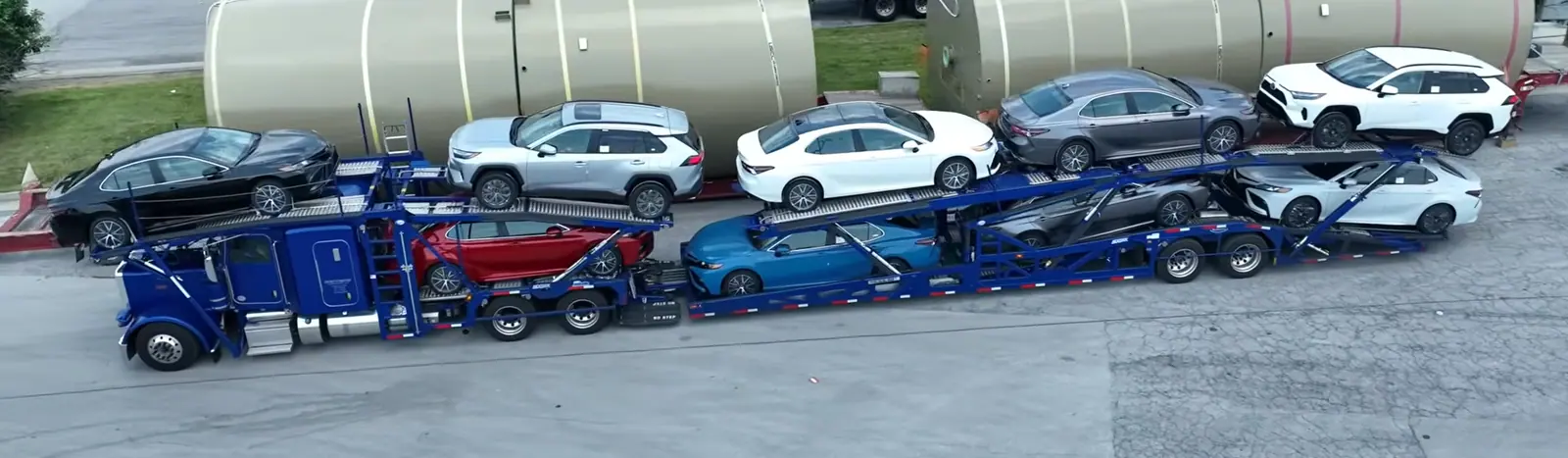
Dealer and auction transport
Auction pickups, dealer trades and retail deliveries, booked by people who know that a missing gate pass or a closed lot costs you money.
Who this is for
Moving a car out of an auction or between dealerships isn't like picking one up from a driveway. There's a release to obtain, a gate to get through, lot hours to respect, and a storage clock that starts running soon after the sale. When any of those slip, a car sits, fees build up, and the unit you bought to retail sits in someone else's yard.
- Independent and franchise dealers buying at wholesale auctions or sending units to sell at them.
- Dealer trades, where a unit has to get from one store to another for a waiting customer.
- Retail deliveries to a buyer's home after an out-of-state or online sale.
- Individual auction buyers who won a car at Copart or IAA and need it moved, often a vehicle that doesn't run.
How an auction or dealer pickup runs
Send us the vehicle and the release details
VIN or lot/stock number, the auction location or dealer address, and the delivery address. For auction vehicles, include the release: Copart and IAA issue a gate pass after payment, and every auction has its own release step. The driver can't get the car through the gate without it.
We check the pickup conditions
Lot hours, whether the vehicle runs, whether the yard will load it with a forklift or the carrier needs a winch, and any appointment the location requires. We sort this out before dispatch so the driver doesn't show up to a closed gate.
Pickup and condition report
The driver inspects the unit and records its condition on the bill of lading. For auction cars, that report is important: it documents the car as it left the lot, separate from whatever the condition report at the sale said.
Delivery to your lot or your customer
Delivered during your receiving hours, or to your buyer's address with a delivery window. Whoever receives the unit checks it against the pickup report and signs.
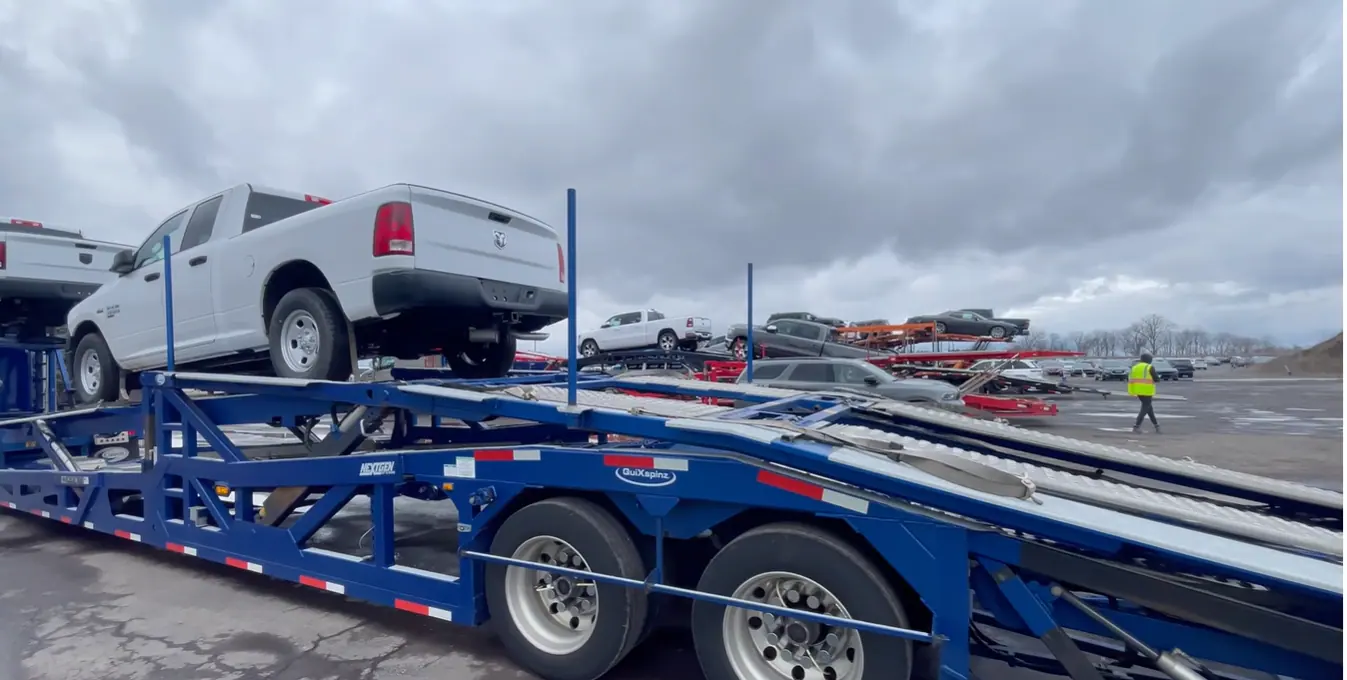
What affects the price of dealer and auction transport
| Factor | Why it matters |
|---|---|
| Runs or doesn't | Salvage and insurance-auction vehicles often don't run. They need a winch-equipped carrier and more loading time. See inoperable vehicle transport. |
| Pickup location | A large auction near an interstate is on many carriers' routes. A small yard or a rural dealer adds miles off the highway. |
| Number of units | Several units from one auction to one lot load and unload efficiently. Scattered single pickups cost more each. |
| Timing | A trade with a customer waiting is a priority job. A unit that can come in on the next truck through is cheaper to move. |
| Vehicle size | Trucks and full-size SUVs use more space and weight than sedans. That counts double on a multi-unit load. |
| Lane | Busy wholesale lanes like California to Texas and Texas to Florida have carriers moving dealer units constantly. Southern California's big auctions also feed California to Arizona. |
If you move vehicles regularly, tell us about your volume and lanes. We'll work out a way of booking and billing that doesn't make you re-enter the same details every time.
Timing: releases, storage clocks and lot hours
Auction storage charges usually start after a short free period that varies by auction and location, so the useful question isn't "how long is transit" but "how fast can a truck get through the gate." Send us the release as soon as payment clears and we'll get the pickup scheduled. The sooner we have it, the more trucks we can choose from.
- Auction pickups: we aim to get a carrier assigned quickly after the release. Actual pickup depends on which trucks are working near that auction.
- Dealer trades: if a customer is waiting, flag it. Priority dispatch is available; see expedited car shipping for what that does and doesn't buy.
- Transit: follows the same federal driving-hour limits as any shipment. Multi-stop dealer loads can take longer than a single car going direct.
What we need from your side
- The release: gate pass, release number or PIN, whatever the auction issued. Send it the moment you have it.
- VIN, lot or stock number, and the exact pickup location. Big auctions have several lots.
- Running condition. If you don't know, say so and we'll plan for a winch.
- Keys. Auction keys stay with the vehicle; for dealer pickups, tell us who has them and where.
- Receiving hours and a contact at the delivery end, plus any delivery appointment rules.
- Insurance requirements. If your store needs a carrier's certificate of insurance on file with you as the certificate holder, tell us at booking.
Paperwork like the title travels separately. Auctions handle title transfer through their own process, and a carrier doesn't need the title to move a vehicle between two US points.
Who actually moves the car
We arrange each move with a carrier partner that runs the lane, and we check its operating authority and insurance before it's dispatched. You get one contact for the whole job, whether that's one unit or a lot full. If you'd like to understand how arranging transport differs from running trucks, our guide to who arranges a shipment and who hauls it lays it out plainly.
Common questions
Can you pick up a car I bought at Copart or IAA?
Do you move vehicles out of Manheim auctions?
How do I avoid auction storage fees?
Can you handle a dealer trade with a customer waiting?
Do you deliver to a retail buyer's home?
Does the carrier need the title?
Can you provide a certificate of insurance for our dealership?
Routes where this comes up
All routes- California to Texas car shippingI-10, or I-40 to Dallas · about 4–7 days in transit
- Texas to Florida car shippingI-10 (I-20 from Dallas) · about 2–5 days in transit
- Michigan to Florida car shippingI-75 · about 3–6 days in transit
- New Jersey to Florida car shippingNJ Turnpike / I-95 · about 3–5 days in transit
Cities we serve
All citiesOften paired with
All services- Inoperable vehiclesA car doesn't have to run to be shipped. It does have to roll, steer and stop, and the carrier has to know it's coming.
- Multi-car shippingTwo cars, three cars, a whole household's worth. Sometimes they belong on one truck and sometimes they don't, and we'll tell you which.
- Open car transportThe way most cars in America get from one state to another: on an open, two-level carrier running the interstates every day.
Get the unit out of the yard and onto your lot
Send us the release, the pickup location and where it's going. We'll schedule a carrier and keep you posted until it's delivered.