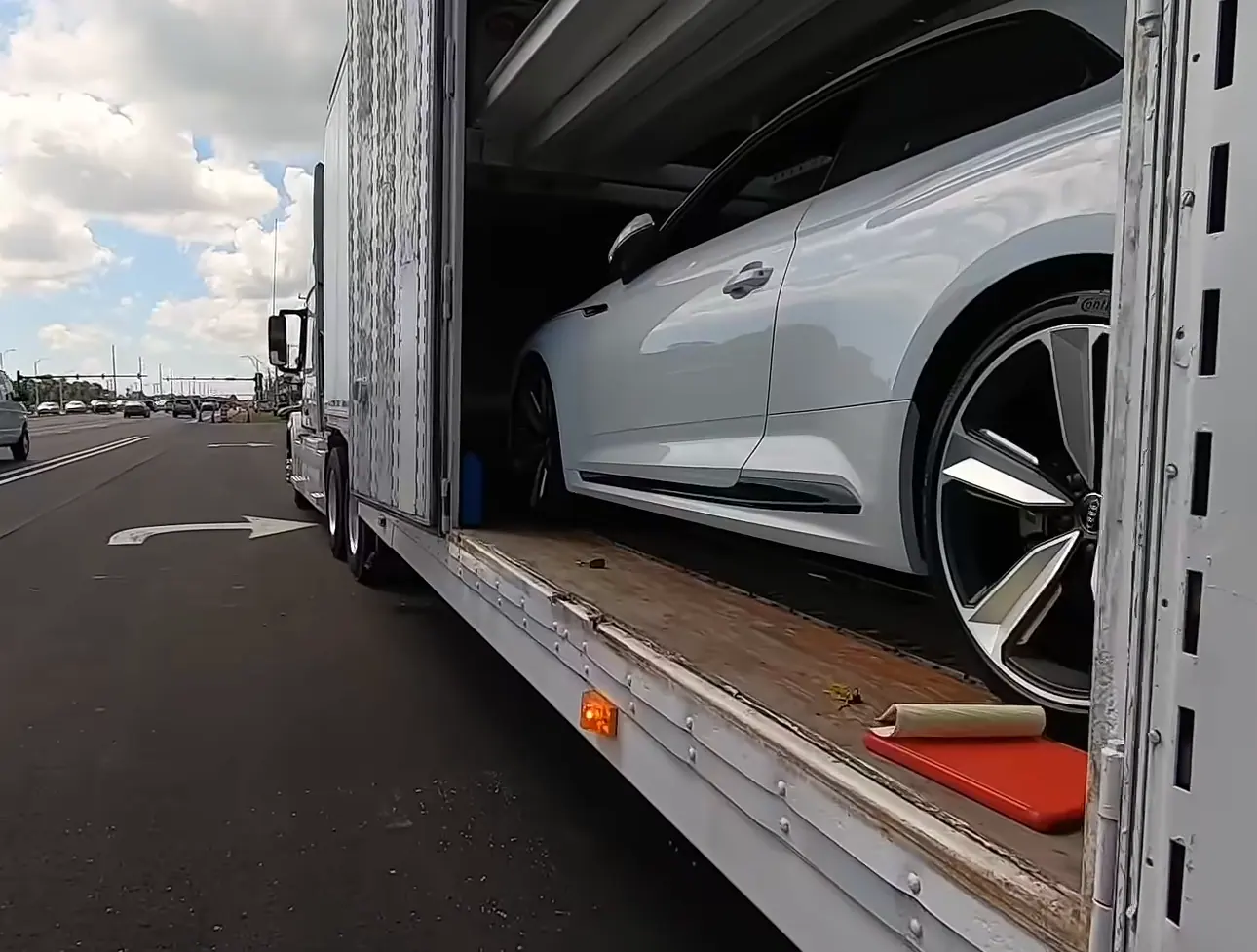
For most cars, open transport is the right call. It's how new cars get to dealerships, it has the most trucks and the most dates, and it costs less. Enclosed transport earns its premium when a car is valuable or irreplaceable, very low, freshly painted, or simply something you want kept entirely out of the weather and road grit for the whole trip.
The choice gets easier once you know what each one actually involves, what "enclosed" can mean in practice, and what you trade on cost and scheduling either way.
The short version
- Open carriers are the standard: more trucks, more dates and a lower price.
- The main risk on an open carrier is weather and road debris, not the driving.
- "Enclosed" covers both soft-sided and hard-sided trailers, and hard-sided gives the most protection.
- Classics, exotics, low cars, show cars and fresh paint are the usual reasons to go enclosed.
- Fewer enclosed trucks run each lane, so plan for more lead time and a wider pickup window.
What open transport actually is
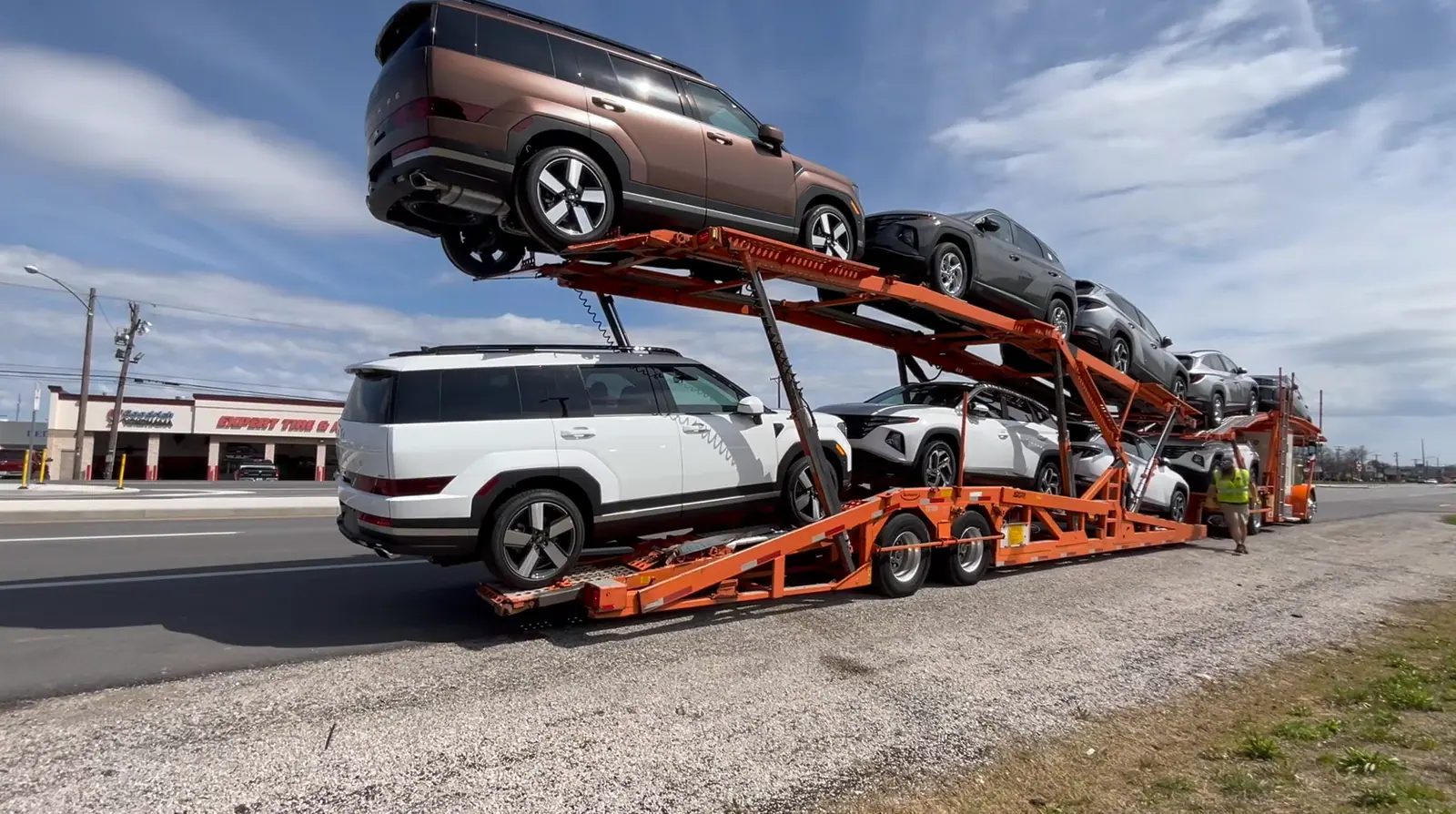
An open carrier is the two-level trailer you see on the interstate loaded with cars, usually seven to ten of them. It's the same equipment that moves new vehicles from factories and ports to dealer lots. Your car is driven or winched onto a deck, secured at the wheels with straps or chains, and rides in the open air for the trip.
Because open carriers are the backbone of the industry, they run nearly every lane, nearly every week. That availability is the biggest practical advantage of open car transport: more trucks means more pickup dates and more reliable scheduling.
Top deck vs bottom deck
Cars on the top deck aren't exposed to spray from the road or to drips from a car above. You can ask for a top-load spot. It isn't always available, since the driver has to plan the load around weight and the order of deliveries, and some carriers charge a little more for it, but it's a reasonable middle ground for a car you care about.
What enclosed transport actually is
Enclosed means the car rides inside a covered trailer, protected from weather, road debris and prying eyes. Beyond that, "enclosed" can describe quite different equipment:
Soft-sided enclosed
A trailer frame with heavy fabric or curtain sides. It keeps out rain, sun and most road grime, and it's generally the more available and less expensive form of enclosed transport. It gives less protection against a direct impact than solid walls.
Hard-sided enclosed
A solid box trailer, often with a hydraulic liftgate that raises the car level instead of driving it up a ramp. This is the most protected way to ship a car and the usual choice for very low cars, collector cars and anything headed to a show.
Small and large rigs
Some enclosed trailers carry one or two cars behind a heavy-duty pickup; others are full-size multi-car trailers. Smaller rigs can reach tighter addresses, while larger ones are more common on long interstate runs. Our enclosed auto transport page covers what to ask a carrier before you book.
Open vs enclosed, side by side
| Factor | Open carrier | Enclosed carrier |
|---|---|---|
| Protection from weather | Exposed to sun, rain, snow and road salt | Fully covered for the whole trip |
| Road debris | Small risk of stone chips, mostly on the lower deck | Shielded |
| Price | The standard rate | A premium over open |
| Availability | Runs nearly every lane, every week | Fewer trucks, especially on less-traveled lanes |
| Scheduling | Easier to match a pickup date | Plan a wider window or more lead time |
| Loading low cars | Ramps; may not suit very low cars | Liftgates and long ramps are common |
| Typical cars | Daily drivers, SUVs, trucks, leases, dealer stock | Classics, exotics, show cars, fresh paint |
| Insurance | Carrier's cargo insurance | Carrier's cargo insurance, sometimes with higher limits; ask |
How much risk is there on an open carrier, really?
For a typical car, less than people fear. In practice, most cars that ship open arrive needing nothing more than a wash. The real exposures are specific:
- Stone chips from road debris, more likely on the lower deck and on long highway runs.
- Weather: road salt and grime in winter, and occasionally hail.
- Drips from above, if a car on the upper deck leaks. Drivers are supposed to load leaking cars low or refuse them.
What doesn't change between open and enclosed is the human part. Most handling damage happens during loading and unloading, which is why a careful carrier and a careful inspection on the bill of lading matter as much as the trailer type. Our car shipping prep checklist shows how to protect yourself at both ends.
Which cars genuinely need enclosed
- Classic and collector cars, where original paint and trim can't be replaced. See classic and luxury car transport.
- Exotics and high-end sports cars, where even a minor chip means an expensive repair.
- Very low cars and cars with front splitters or long overhangs, which benefit from a liftgate.
- Fresh paint: a recent restoration or respray that hasn't fully cured.
- Show and auction cars. Cars heading to the big January auction week in Scottsdale often travel enclosed so they arrive ready for the block.
- Delicate soft tops on older convertibles.
And who usually doesn't: daily drivers, leased cars, most SUVs and pickups, and work vehicles. Electric vehicles don't need enclosed transport either. The questions with an EV are its weight and charge level, which our EV shipping page covers.
The cost and scheduling trade-off
Enclosed costs more for structural reasons. The trailers carry fewer cars, so each car carries more of the trip's cost. The equipment is specialized and more expensive to run. And there are simply fewer enclosed trucks, so you're competing for a smaller pool of space. Our pricing page explains how each of these feeds into a quote, and our guide to what it costs to ship a car goes deeper.
Scheduling is the less obvious cost. On a busy lane, open trucks pass through constantly; an enclosed truck may come through less often. Give enclosed shipments a wider pickup window and book earlier, especially in the busy seasons. On long seasonal lanes like Boston to Florida, enclosed capacity is better in the fall, when collector cars and winter cars head south, but it books up.
A quick way to decide
Ask yourself these questions, in this order:
- Would a stone chip or a winter's worth of road grime be a real problem for this car, or just a car wash?
- Is the car low enough that a standard ramp is a worry?
- Is the car's value mostly in its paint and originality?
- Is your pickup date flexible enough to wait for an enclosed truck on your lane?
If you answered no to the first three, open is almost certainly right. If you said yes to any of them, enclosed is worth pricing. If you're not sure who's actually doing the hauling, our guide to brokers vs carriers explains how to check.
Questions readers ask
Is enclosed transport worth it for a brand-new car?
Is enclosed shipping slower?
Can I request the top deck on an open carrier?
Do enclosed carriers take more than one car?
Written by the Tailwind Auto Transport team. This guide is general information, not legal, tax or immigration advice; rules change, so confirm anything critical with the agency involved.