There's no honest single answer, and any site that gives you one before asking about your car and your dates is guessing. What you'll pay comes down to the handful of things a carrier weighs every time it decides whether to take a load: how far the car is going, whether the route is one trucks already run, how much room and weight the vehicle takes up, open or enclosed, the time of year, and how much flexibility you give on dates.
This guide walks through each of those factors, explains how a car shipping price is actually put together, and covers the part most pricing pages skip: why the cheapest quote is often the one that costs you a week.
The short version
- Distance sets the base, but the per-mile rate falls as the trip gets longer. A cross-country move costs far less per mile than a short regional one.
- Busy interstate lanes between big metros are easier to fill, so they're easier to price, than trips to and from rural addresses.
- Enclosed transport, oversized or non-running vehicles, and fixed pickup dates each add to the price.
- Season matters. Snowbird months, summer moving season and the weeks around college move-in tighten truck space.
- A quote is only a price if a carrier will accept it. A realistic all-in price gets your car moving; a lowball one can leave it waiting.
How a car shipping price is actually built
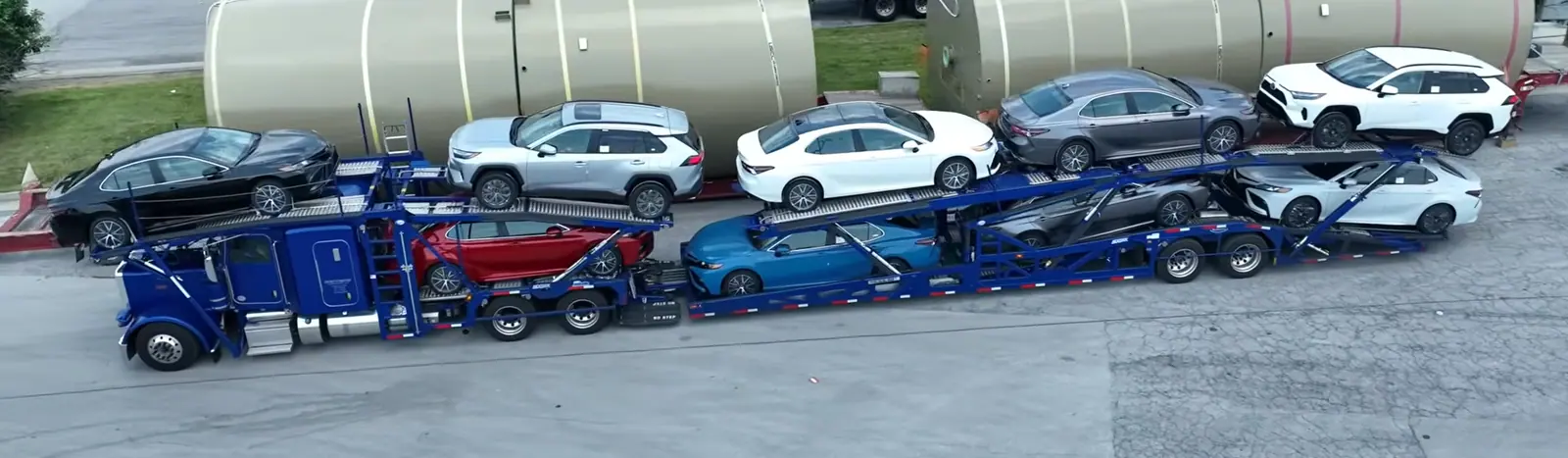
A car hauler running an interstate route is filling a trailer, usually seven to ten cars on two decks, and your car is one slot on it. The price of shipping your car is, in plain terms, what it takes for a qualified carrier to give your car one of those slots on a truck heading your way, inside your pickup window.
That slot has to cover the carrier's real costs: diesel, the driver's time, tolls, insurance, maintenance on a heavy rig, and the stops to load and unload. On top of that is the work of arranging the move: finding and checking a carrier, scheduling pickup, keeping you updated and handling anything that goes sideways.
This is why car shipping behaves like a market rate rather than a fixed fee. The same trip can price differently in March and in July, because fuel, demand and the number of trucks running a lane all move.
Distance, and why the per-mile rate falls
Longer trips cost more in total, but much less per mile. Every load has fixed costs that don't care about distance: the driver coming off the highway to reach your street, loading and strapping the car, the inspection, the paperwork and the scheduling. On a short trip those costs make up most of the price. On a long one they're spread across a lot of miles.
| Trip length | What happens to the price | Why |
|---|---|---|
| Under about 500 miles | Highest cost per mile | Fixed costs dominate, and short hauls often break up a carrier's longer route. |
| About 500–1,500 miles | Per-mile cost drops noticeably | Multi-day interstate runs where your car shares the trailer for most of the trip. |
| 1,500 miles and up | Lowest per mile, highest total | Cross-country lanes like the West Coast to Texas or the Northeast to Florida. |
So if a 300-mile quote looks oddly close to a 900-mile one, that's usually not a mistake. Long lanes like California to Texas, or coast to coast from New York to California, look expensive in total and cheap per mile, and both are true.
The route matters as much as the miles
Two trips of the same length can price very differently depending on where they start and end. Carriers price what they can fill.
Metro to metro vs. a farm road off the interstate
A pickup in a big metro on a major interstate sits right on the carrier's path. New York to Florida on I-95 is one of the most heavily run corridors in the country, so there's almost always a truck going that way. A pickup sixty miles down two-lane roads from the nearest interstate means the driver leaves the route for half a day, and the price reflects that.
Direction and balance
Flows aren't symmetrical. In the fall, far more cars head south to Florida and the desert Southwest than come back north, so southbound space is tighter while northbound trucks are looking for loads. In spring it reverses. The same lane can price differently depending on which way you're going and when.
Your vehicle: size, weight and whether it runs
Car carriers work within limits on both space and weight. Federal rules cap a loaded tractor-trailer's gross weight on the interstate at 80,000 pounds, and overall height is restricted too (commonly 13 feet 6 inches). A full-size pickup or a three-row SUV takes more deck space and more of the weight budget than a compact sedan, so it costs more to carry.
Modifications
Lift kits, oversized tires, roof racks and cargo boxes can push a vehicle past what fits on a carrier's upper deck, which narrows the trucks that can take it. A lowered car with a front splitter may need a carrier with long ramps or a liftgate. Mention any of this when you ask for a quote; finding out on pickup day is when it gets expensive.
Cars that don't run
A non-running car has to be winched on and off, which takes equipment not every truck has, plus extra time at both ends. That's why inoperable vehicle transport costs more than shipping the same car when it drives.
Open vs enclosed transport
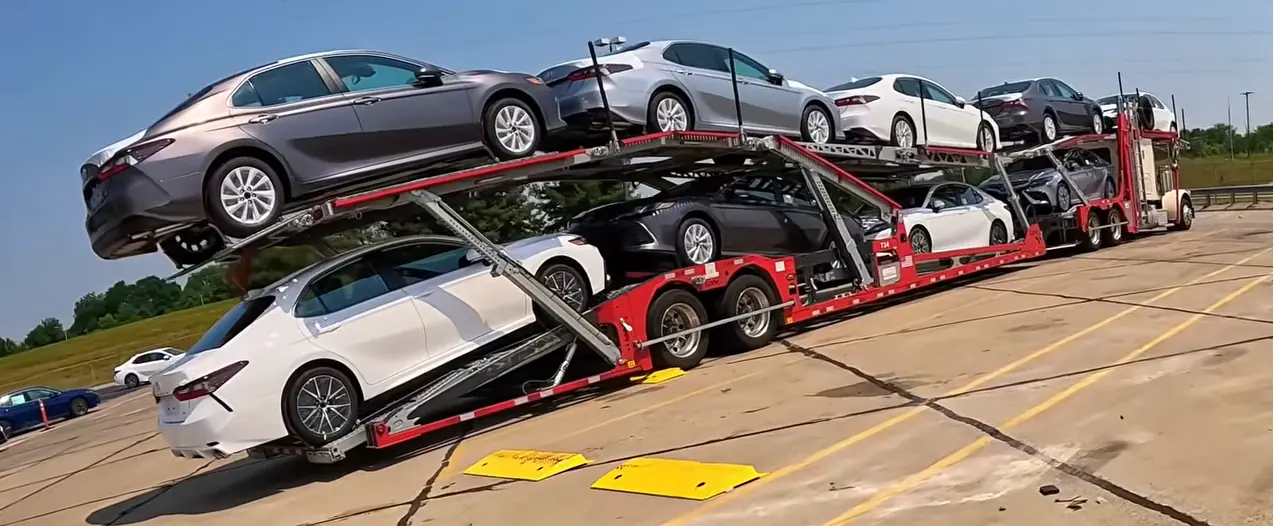
Open car transport is the standard: the same two-level trailers that deliver new cars to dealerships. It's the most available option and the least expensive per car. Enclosed transport costs more because the trailers carry fewer cars, the equipment is specialized, and fewer trucks run any given lane.
For most daily drivers, open is the sensible choice. For collector cars, exotics, very low cars or fresh paint, the premium buys real protection. We cover the decision in detail in open vs enclosed car transport.
Season, lead time and flexibility
Timing changes the price more than most people expect. Three things drive it:
- Season. Fall snowbird season (south to Florida, Arizona and Texas) and the spring return, summer moving season, and the late-August college rush all tighten truck space on the lanes they touch. Major holidays thin out the drivers on the road.
- Lead time. Booking a couple of weeks or more ahead gives a carrier time to build your car into a planned route. A same-week request has to find a truck with an open slot right now.
- Flexibility. A pickup window of a few days lets us match your car to more trucks. A single fixed date, or a requirement to be first on and first off, narrows the options, and you pay for that.
If the date really can't move, expedited car shipping pays a carrier to prioritize your car. It shortens the wait for pickup, not the drive itself; our guide to how long car shipping takes explains why.
Cheap car shipping: why the lowest quote often costs more
Here's how a too-good quote usually plays out. The order goes onto a dispatch board at a price carriers won't take, because it doesn't cover their costs on that lane. Days pass. You get a call saying a driver could be found if the price went up. You either pay the difference or keep waiting, and by then your pickup date has come and gone.
Not every low quote is a trick. Sometimes a company simply has a truck with an empty slot on your exact route. But a quote is only a price once a carrier has agreed to haul at it. These questions separate a real price from a placeholder:
- Is this the total, including fuel and insurance, or will anything be added later?
- What happens if no carrier accepts at this price by my pickup date?
- Is there a deposit, when is it due, and under what conditions is it refunded?
- Who will actually haul the car, and can I see their insurance certificate?
- Are the terms in writing before I pay anything?
If you're not sure who you're dealing with, our guide to brokers vs carriers shows how to check any auto transport company in a few minutes.
What an all-in price should cover
The way we price is simple to describe. We set the price at a level a carrier we've vetted will accept for your lane and dates, and we give you one number. That number covers door-to-door transport, the carrier's cargo insurance while your car is in its care, and fuel, so nothing gets added after you book. Your booking confirmation spells out when payment is due.
Whoever you book with, ask what isn't included: what happens if nobody can receive the car on delivery day, or if your address can't take a full-size carrier. Our car shipping pricing page walks through what's included and what changes a price. When you're ready, get a quote for your car; it takes a couple of minutes and there's no obligation.
Questions readers ask
Is it cheaper to drive my car or ship it?
Do car shipping companies charge by the mile?
Does it cost more to ship a car to or from a rural area?
Can I lower the price by being flexible?
Written by the Tailwind Auto Transport team. This guide is general information, not legal, tax or immigration advice; rules change, so confirm anything critical with the agency involved.